
Separate agricultural contents
Keep chemicals, fuel, seed, food-adjacent packaging and ordinary parts in appropriate systems. Choose a working size after establishing zones and an aisle. See current container prices.
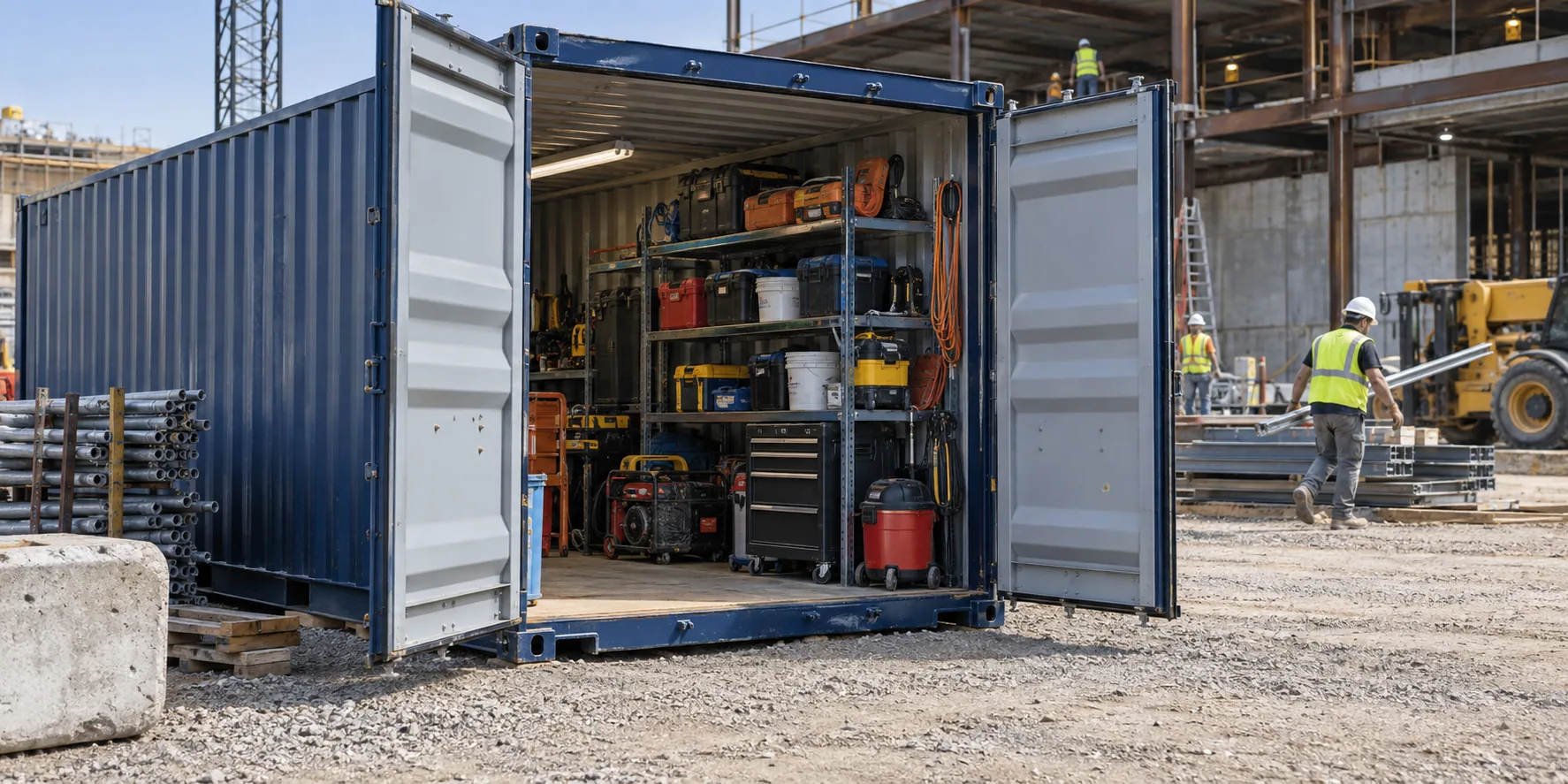
Plan for harvest and rural access
Check lanes, culverts, irrigation features and equipment movement. Protect docks and truck turns in food and warehouse yards. See current container prices.
Use the season honestly
Lease harvest and project peaks. Buy recurring farm, food or contractor storage; broad machinery needs may call for a steel building.
Separate farm and food-support stock deliberately
Packaging, ordinary parts, tools, chemicals and temperature-sensitive products should not be treated as one storage category. Define sanitation, pest and environmental requirements before choosing the unit. For suitable contents, use the size guide to maintain labeled zones and an accessible aisle. Dense repair parts belong low, while first-use seasonal supplies belong forward. A container can support agricultural work without being assumed suitable for every food or farm material.
Plan the valley approach and recurring use
Check irrigation crossings, gates, culverts, soft shoulders and overhead lines on rural sites. Plants add dock schedules, rail and truck circulation. Heat-sensitive goods need explicit protection. Lease for harvest support, plant projects or construction; purchase for recurring farm-service or contractor capacity with maintained placement. Review farm-equipment storage guidance, and compare wider permanent machinery coverage with a steel building when the working need exceeds compact lockable storage. Keep seasonal farm traffic outside the storage door working area.