
Organize farm or warehouse overflow
Separate contents by handling and sensitivity and match the load to shipping container working dimensions.
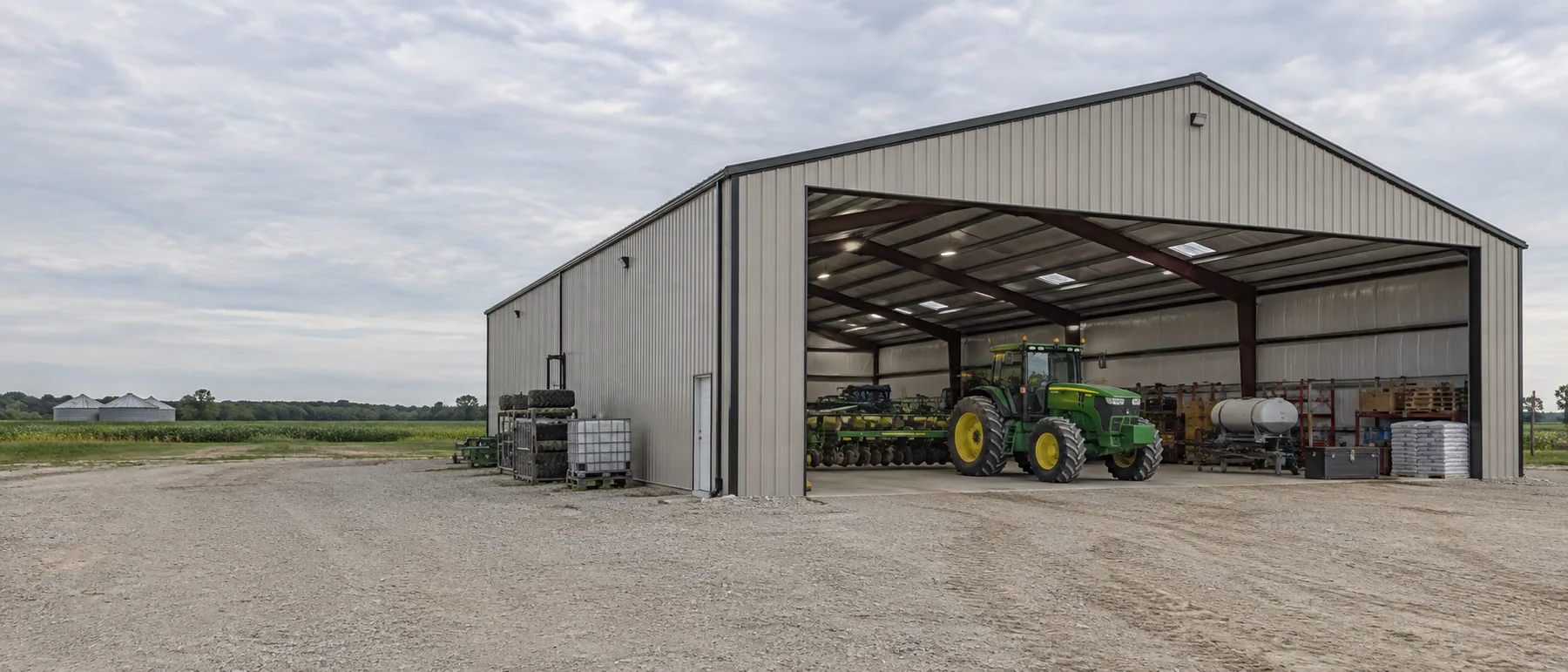
Keep harvest and freight moving
Check levee or drainage conditions, gates, docks and farm roads, protecting equipment and truck routes.
Use the demand cycle
Lease harvest and warehouse peaks. Buy recurring farm, logistics or contractor capacity.
Separate port, farm and food-support needs
Ordinary tools and packaged supplies differ from food, chemicals or temperature-sensitive products. Document handling requirements, then coordinate river-port traffic or agricultural approaches as the site requires.
Distinguish port, food and agricultural storage needs
Keep release-status labels on logistics stock and work-order labels on service parts. Food-adjacent packaging, chemicals and sensitive products need suitability reviews before entering ordinary storage. For appropriate goods, keep dense material low and a retrieval aisle clear. Compare racks and pallets with the usable dimensions. A container should remain an accountable stock area, not an outside pile where the handling or environmental requirements become unclear after delivery.
Review river yards and rural final approaches
Confirm gates, rail, docks, trailer turns and security on industrial sites. Agricultural properties add irrigation crossings, culverts, overhead lines and soft shoulders. Heat-sensitive contents need explicit protection. Rent for peaks, harvest support or construction; buy recurring service or distribution capacity with upkeep assigned. Review site preparation before approving the pad, preserving drainage, equipment routes and eventual pickup access through later property changes. Retain clear identification when seasonal goods move between field and warehouse storage.