Know which contents need conditioning
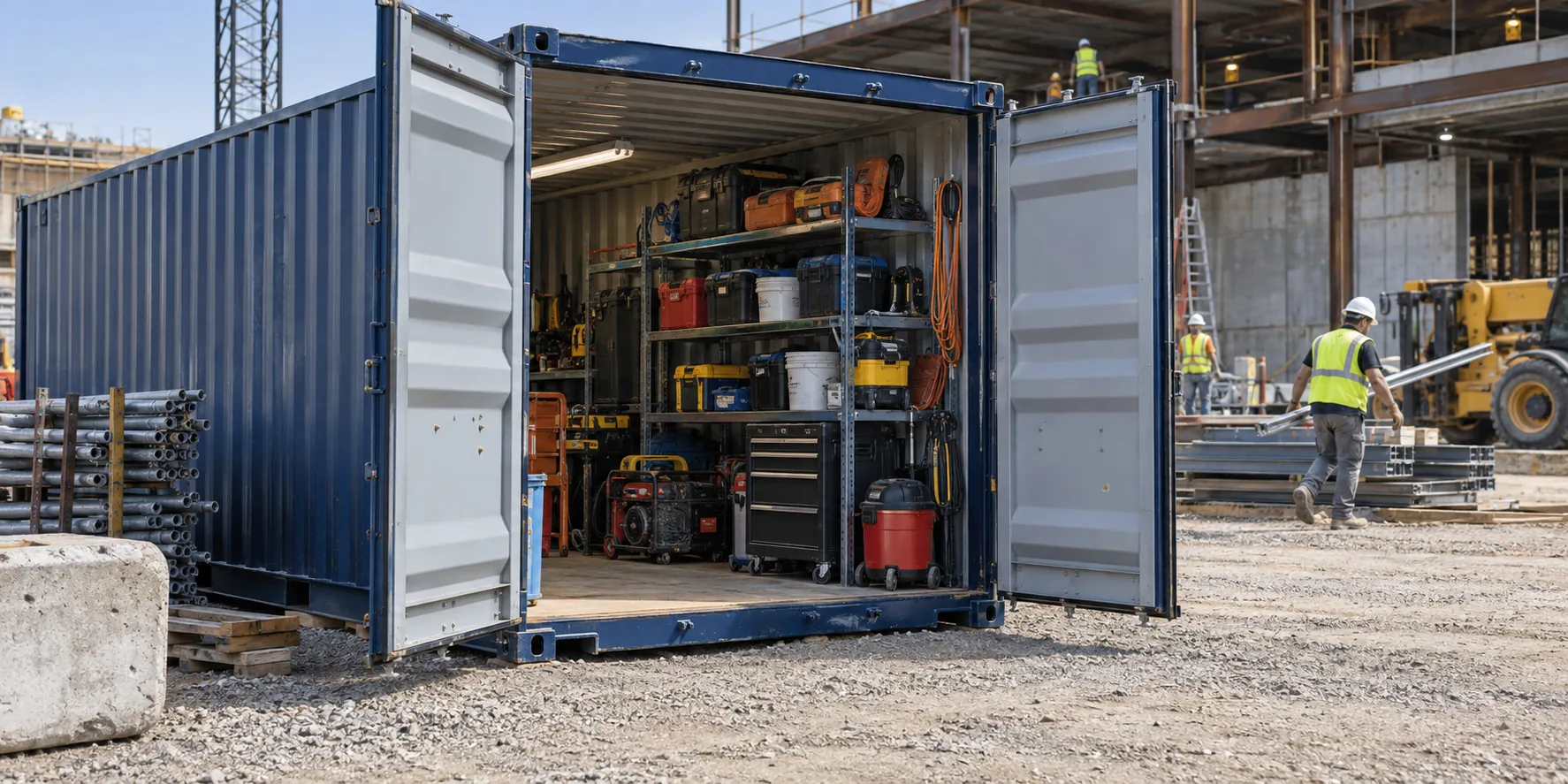
Cases, tools and fixtures may suit dry storage; electronics and laboratory equipment may not. Compare the planned load with usable dimensions and environmental requirements.
Coordinate campus access
Set security check-in, delivery windows, overhead clearance and the final pull-away. Keep clean, employee and emergency routes open.
Use the facility timeline
Lease shipping containers for build-outs and transitions. Own recurring contractor or facility storage; compare occupied needs with mobile offices.
Qualify technical contents before selecting a box
Electronics, batteries, precision parts and controlled materials can require temperature, cleanliness or fire provisions beyond ordinary storage. Let facility personnel approve the contents before specifying shelves and locks. For suitable tools and packaged stock, compare racks and access paths with the usable interior. Keep serial-number or job identification visible and retain inspection room. A container should improve material accountability, not move an unresolved environmental requirement outside the building.
Integrate storage into campus operations
Confirm badges, delivery hours, gates, surface protection and the approved door direction. Preserve pedestrian, process, utility and emergency routes. A lease can support an expansion or equipment transition; ownership fits continuing contractor or facility use where maintenance and approved modifications are controlled. Before adapting a unit, review container modification options and their structural implications. The full working scope matters more than a box price that leaves transport, power and site preparation unresolved.