Put the container where crews can use it
The best location shortens material handling without consuming a fire lane, equipment turn, delivery zone or future work area. Walk the site plan beyond the current phase. A convenient location today can become trapped behind paving, fencing, excavation or completed construction.
Plan access inside the box
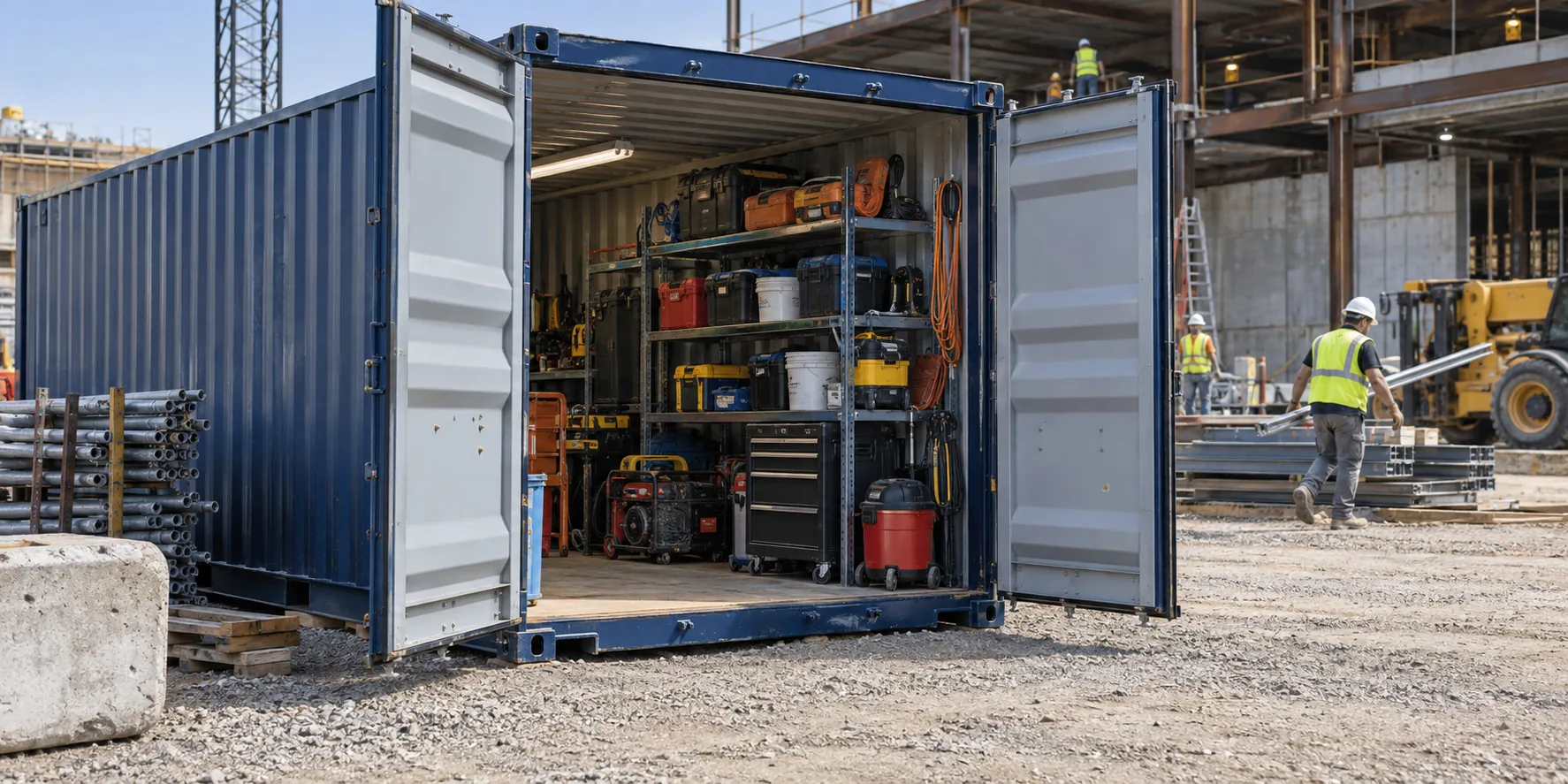
Organize frequently used tools near the doors, leave a retrieval aisle and separate small valuable equipment from long material. Shelving, lighting, ramps and lock protection should follow the actual inventory and the people handling it.
Lease around the project schedule
A leased shipping container often fits a project with a defined mobilization and demobilization date. Confirm the minimum term, extensions, pickup notice and who must clear the access lane at the end. buy a shipping container can work for contractors who move owned storage between recurring jobs.
Rent jobsite storage containers or buy for recurring projects
For a single build, rent a jobsite shipping container around mobilization, project extensions and final pickup. Contractors with a continuing pipeline may buy a shipping container and budget for moving it between sites. Keep the next phase of work in view: a storage unit behind new fencing or excavation can become expensive to retrieve. Review construction-site container storage and container rental periods before agreeing to the schedule.
Compare jobsite storage containers: quote checklist
- Tool and material inventory by size and value
- Daily door and aisle access
- Crane, lift and delivery traffic around placement
- Project phases that may change the pickup route
- Lease term, extensions and final removal
Use the shipping container sizes and dimensions guide and common questions to resolve the details before comparing suppliers.