Separate the load before choosing a box
Do not mix chemicals, fuel, seed, food-adjacent packaging and ordinary repair parts without reviewing their requirements. Measure bulky items and create retrieval zones, then use the shipping container dimensions chart to select the working length.
Harvest traffic changes delivery access
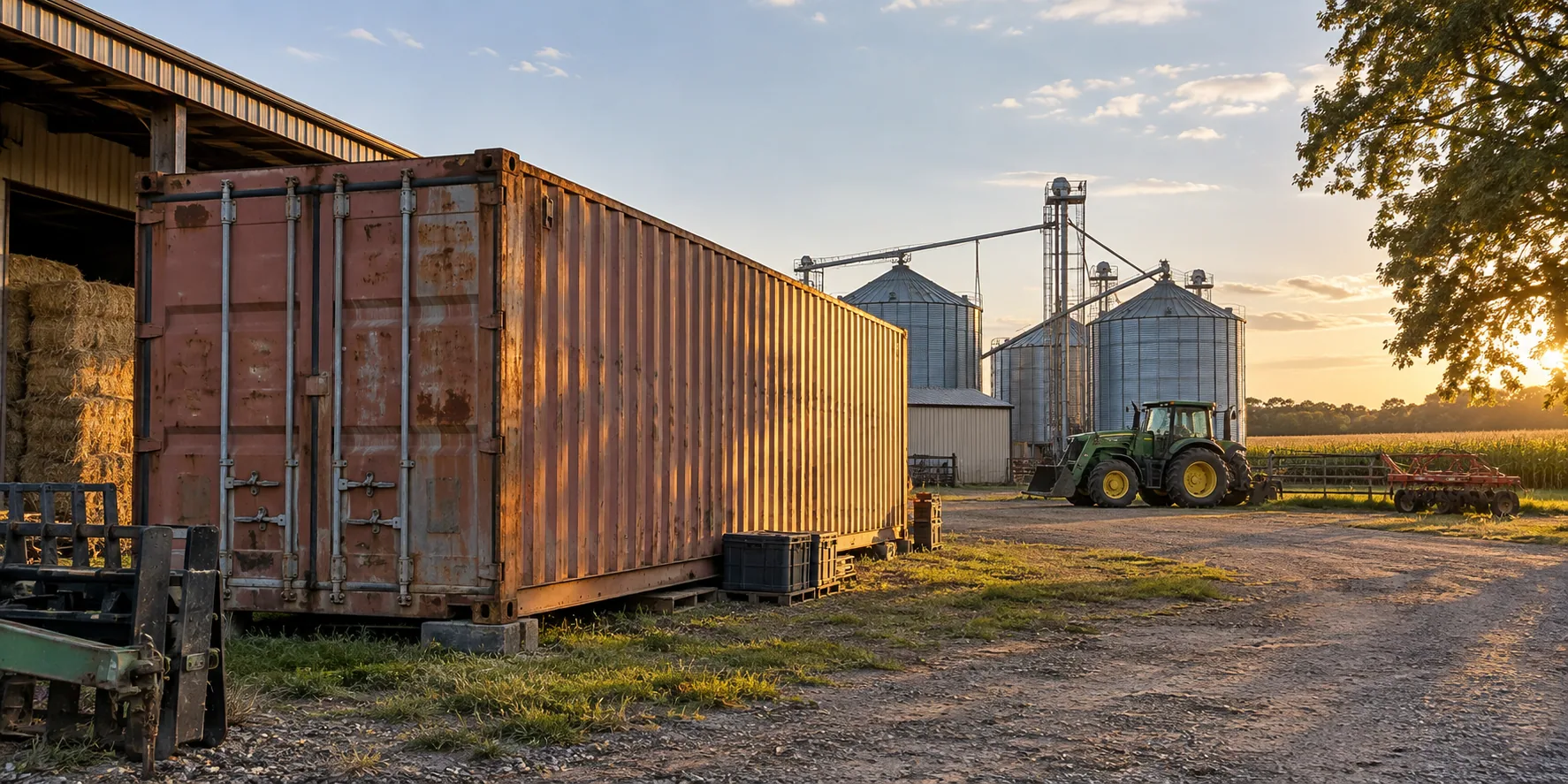
Farm roads, irrigation crossings, trucks and field equipment can limit when and where a container is placed. Confirm culverts, gate width, surface strength and a safe trailer pull-away.
Protect temperature-sensitive inventory
A standard dry unit does not provide cold storage. Products with temperature limits need the appropriate insulated or refrigerated system and monitoring. Permanent machinery coverage and repair work may be better served by a steel building.
Harvest peak or year-round use
Shipping container leasing can absorb harvest or construction demand. Buying supports a farm, food business, contractor or service operation with continuing secure-storage needs.
Keep clean packaging apart from agricultural repair gear
Salinas farm and processing support may require storage for packaging, tools and replacement parts, but those loads deserve separate zones. Review food-adjacent material against the operation’s sanitation and environmental requirements before moving it outside. For suitable durable supplies, label stock and retain inspection space. Compare shelves and long equipment with the container sizes chart. A dry secure box can help release work space without implying refrigeration, pest controls or production-room conditions that were never part of the specification.
Plan seasonal capacity around actual field access
Photograph rural gates, culverts, shoulders and irrigation crossings on the final approach. Keep the position outside equipment travel and drainage, with a firm landing at the doors. Leasing shipping containers can cover harvest support or a project period. Purchase fits recurring farm-service use with approved placement and upkeep assigned. Schedule cleanup between seasons so old packaging does not consume next season’s capacity. Preserve removal access as machinery or temporary barriers changes the yard, and separate wet returned tools from clean stock.