Use the size the route can carry
Measure turns, grades and pull-away room before choosing from common sizes.
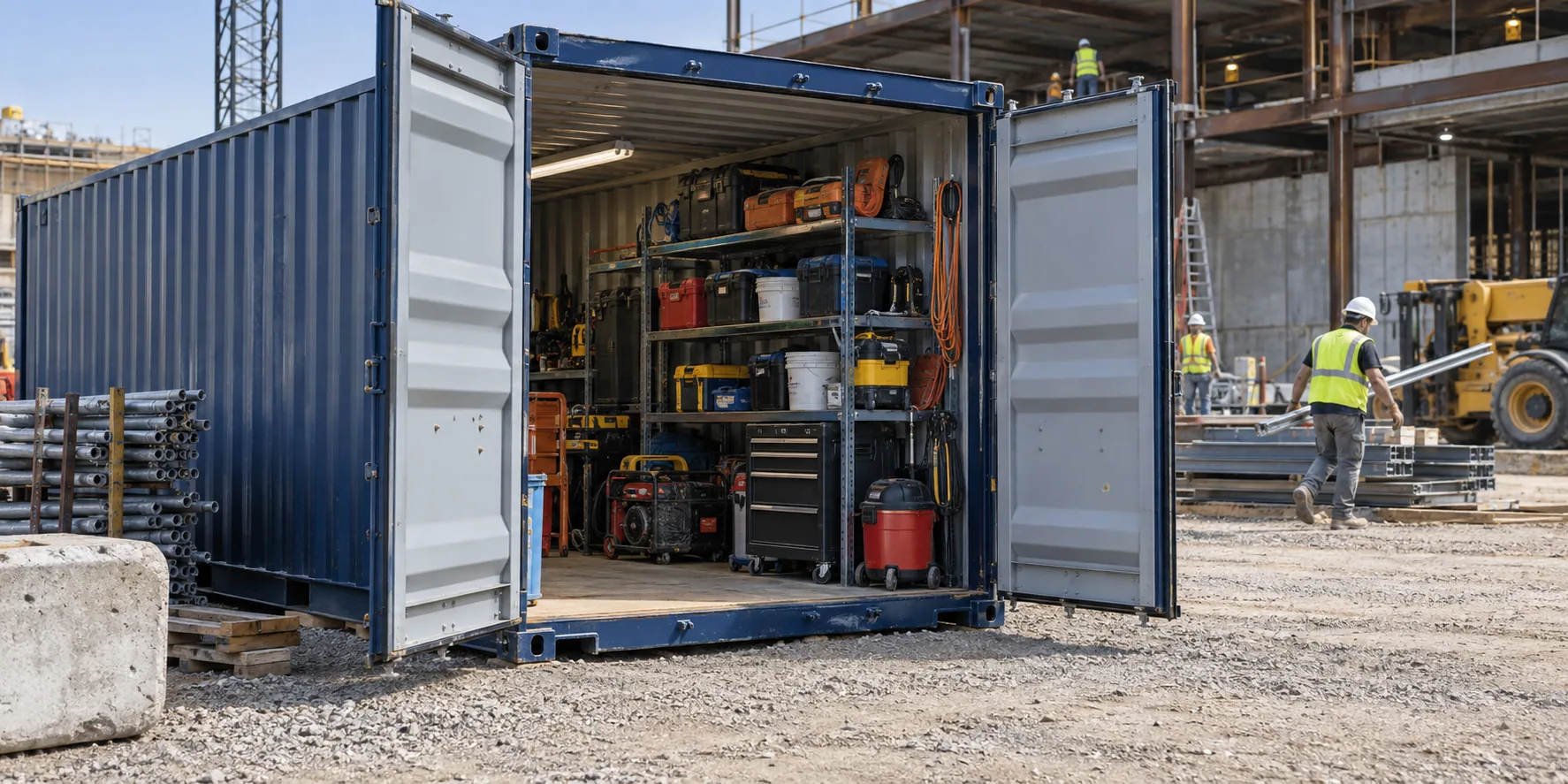
Prepare a level, accessible position
Protect public, utility and emergency routes and reserve winter pickup access.
Choose by work duration
Lease renovations and infrastructure projects. Buy recurring industrial or contractor storage.
Keep heavy-industry routes open
Do not place a unit across crane, rail, utility or service access. Older mill and river properties may need a joint review with site operations before the delivery trailer enters.
Choose useful capacity only after route review
Steep grades, bridge or clearance constraints and older industrial streets can limit practical container length. Confirm the approach, gate and trailer pull before assigning a container size. Organize plant parts by system and project supplies by installation phase, keeping dense goods low and an inspection aisle clear. Sensitive technical or medical contents may require conditions beyond standard storage. Compact organized space is more useful than extra volume that the delivery equipment cannot safely reach.
Keep heavy-industry and winter access working
Coordinate rail, cranes, docks, utilities, shifts and emergency routes with site operations. Prepare a stable level pad and reserve plowing and pickup space. Rent for plant projects, construction or institutional renovations with extensions clear. Buy recurring contractor or industrial capacity with inspections assigned. Review delivery-space guidance, and ensure later fences, curbs or landscaping do not trap equipment that must eventually leave the river or hillside property.