Organize for plant or project work
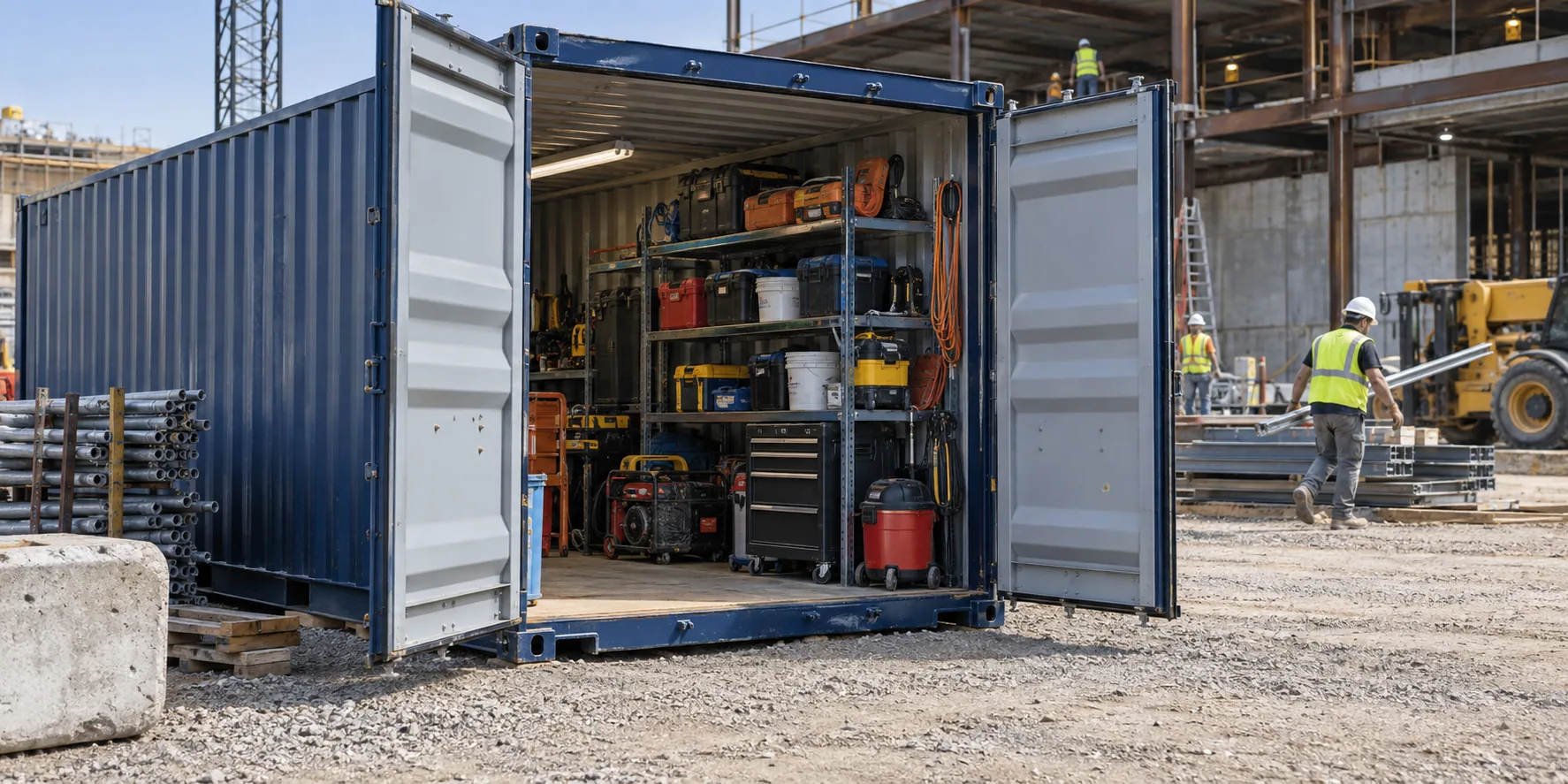
Place high-turn parts near the doors and verify rack clearance with the shipping container size guide. See current container prices.
Preserve rail, docks and snow room
Schedule around shifts and prepare stable supports, keeping emergency and forklift routes clear. See current container prices.
Temporary support or long-term parts capacity
Lease shutdowns and renovations. Buy recurring plant or contractor storage.
Prepare lakefront and legacy industrial sites
Inspect pavement, drainage, rail clearances and snow routes around older plants. Waterfront wind and weather also make exterior condition and regular door-hardware checks important.
Build accessible industrial and institutional stock zones
Organize plant parts by machine, renovation supplies by phase and service tools by crew. Dense goods belong low and a retrieval aisle should remain open. Use the usable dimensions to check racks and large fixtures. Sensitive medical, electronic or finish materials may need environmental controls beyond ordinary outdoor storage. Keeping inventory labeled and reachable helps the container support the existing operation rather than become a difficult holding area outside it.
Prepare older plants for winter and lake exposure
Inspect gates, pavement, rail, docks, overhead utilities and trailer turns before delivery. Reserve snow-storage and pickup space and maintain drainage around level supports. Leasing fits projects, shutdowns and temporary overflow. Buying fits recurring manufacturer or contractor capacity with assigned roof, seal and hardware checks. Follow the used-container inspection guide before ownership, and protect emergency access as fencing or yard layouts change around the unit. Revisit snow clearance whenever yard equipment changes the working layout.