Build storage around the production issue
Separate line-side parts, tooling and project material, store heavy components low and retain inspection access. Check the plan against the interior and door dimensions.
Protect docks, rail and snow operations
Schedule delivery around shifts and freight, keep rail clearances and fire routes open, and reserve plowing access. A stable drained pad prevents avoidable door and floor problems.
Use temporary equipment for temporary work
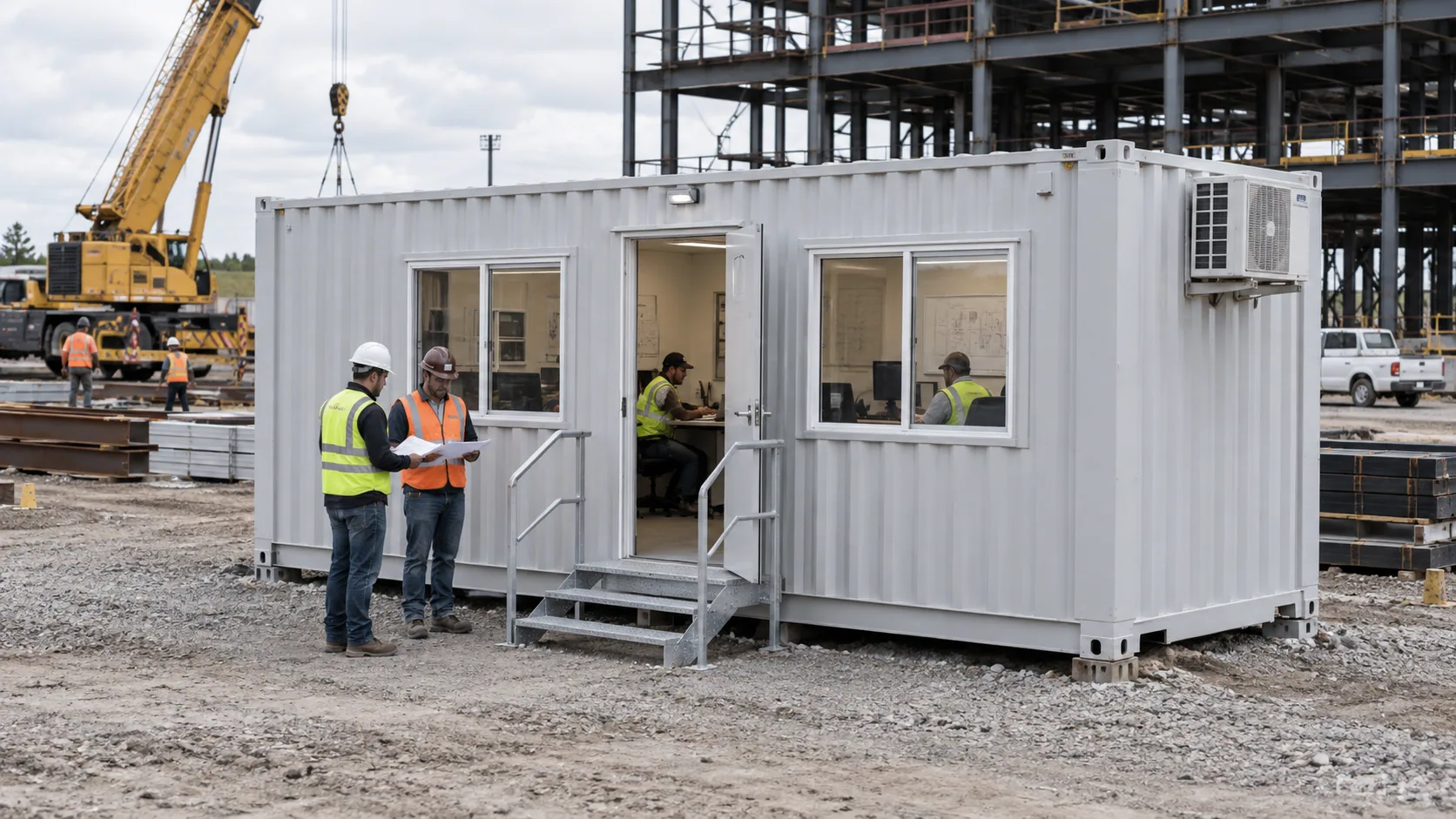
Lease shipping containers for shutdowns, launches and construction. Purchase for recurring plant or contractor storage; permanent work bays may justify a steel building.
Use the unit as a controlled production support area
Automotive, glass and manufacturing operations should label parts by line or work package and retain the issue procedures used indoors. Dense components belong low and an inspection aisle should remain clear. Compare racks and tooling with the inside dimensions. Technical or sensitive materials may require environmental and cleanliness controls beyond ordinary storage. A container can support a launch, shutdown or construction phase without becoming a stock area where traceability and access are lost after goods move outside.
Preserve rail, docks and winter service
Confirm gates, rail clearances, trailer turns, shifts and the final truck pull before placement. Reserve snow and pickup space and direct meltwater away from stable supports. Rent for plant projects or temporary inventory; buy recurring manufacturer or contractor capacity with upkeep assigned. Follow used-container inspection guidance, and compare permanent wide equipment work with a steel building when the operating need exceeds a cargo-width storage layout.