Size for active retrieval
Lay out racks, pallets and an aisle using the clear measurements.
Protect freight and fleet routes
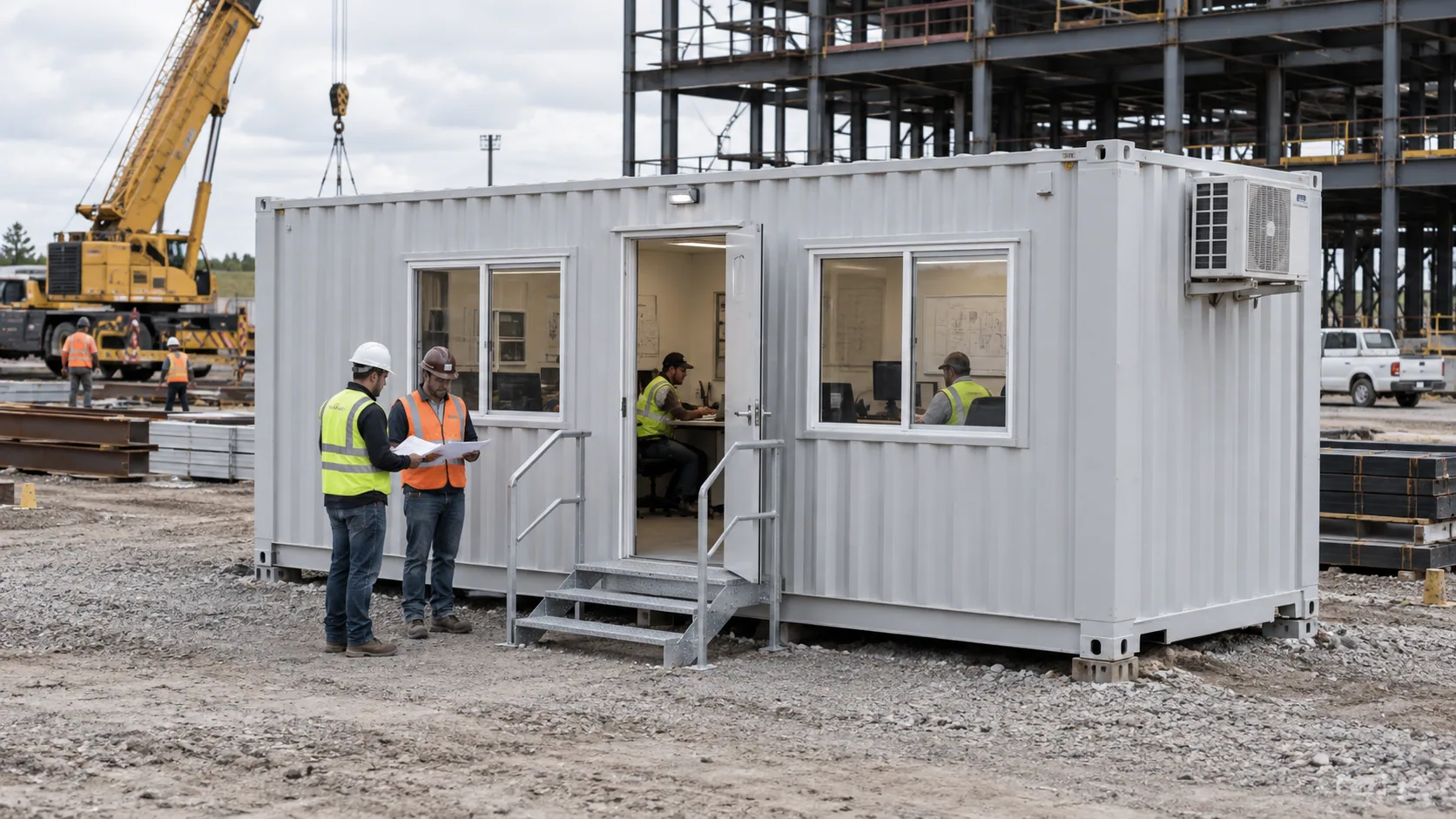
Coordinate gates, grades and delivery timing and keep the unit outside docks and fire lanes. See current container prices.
Project or permanent capacity
Lease peaks and builds. Buy recurring contractor or logistics storage. See current container prices.
Account for heat, grades and warehouse traffic
Foothill access and inland heat can change both delivery and content suitability. Keep the placement outside dock approaches and specify environmental protection for sensitive inventory.
Organize industrial overflow for efficient issue
Keep high-turn parts and goods near the doors, dense items low and shelves labeled by job or movement rate. Compare racks, pallets and long material with the usable dimensions. Heat-sensitive products require an environmental plan, not simply a secure enclosure. Construction supplies can be grouped by installation phase to avoid repeated handling. The unit should relieve indoor congestion while leaving staff a clear inspection and retrieval path to the inventory moved outside.
Check foothill routes and active yard circulation
Confirm grades, gates, overhead clearance, drainage and trailer pull-away room. Warehouses add docks, hostlers and shift traffic; managed properties add delivery hours and screening. Rent for seasonal stock or building phases with pickup preserved. Buy recurring manufacturer or contractor capacity with upkeep assigned. Review delivery-space guidance, and keep the placement outside emergency routes or the trailer turns required to run the surrounding operation. Recheck freight clearance when parked trailers change the yard layout.