Build a practical service or overflow box
Group fleet parts, packaged goods or tools by issue frequency, control floor loading and preserve an aisle. Check shelving against the inside height and cargo doors.
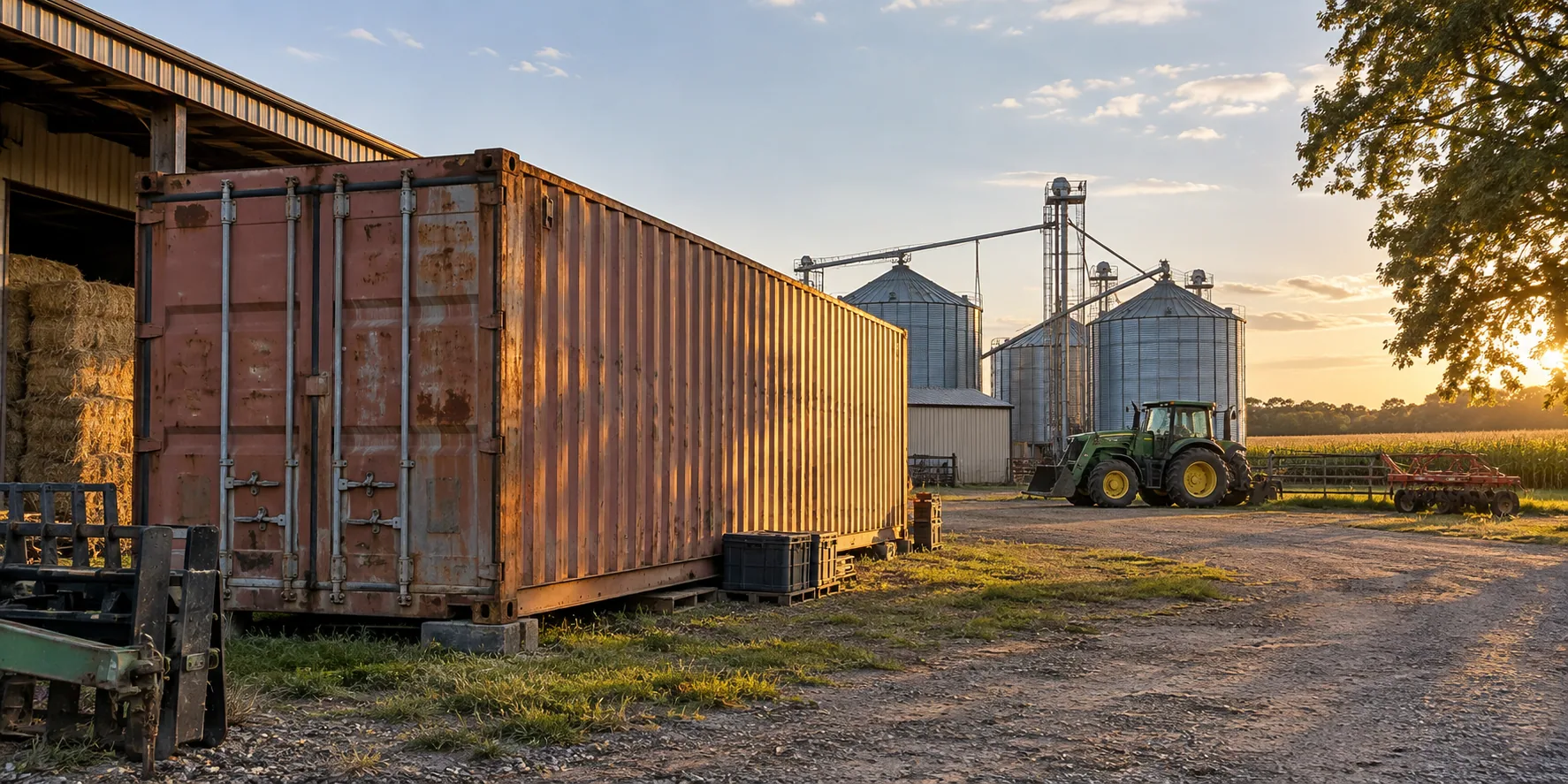
Coordinate every wheel path
Map semitrailer turns, docks, forklifts, employee parking and emergency access before choosing placement. Heat, wind and property rules also affect the appropriate setup.
Decide with the yard horizon
Lease shipping containers for overflow and projects. Purchase for recurring logistics, manufacturing or fleet storage; a steel building may better serve permanent repair bays.
Give fleet parts their own retrieval system
Fontana fleet shops can use a container for durable spare parts, consumables and project equipment while keeping repair bays open. Group stock by vehicle system and mark items reserved for a particular job. Returned components should not sit among serviceable replacements. Measure bulky parts with their crates against the cargo door opening, and leave room for safe manual handling. If parts need constant forklift access, discuss the loading arrangement before treating a long container as a miniature warehouse.
Keep tomorrow’s truck movements in view
A storage box cannot occupy a turning pocket simply because today’s fleet is out on the road. Review the position with dispatch and maintenance staff, including how trucks park after hours. Keep room for inspection along the exterior and preserve access for pickup. A lease works for a short fleet project or seasonal overflow. Ownership fits a stable yard with recurring demand, provided the box has a named maintenance owner and does not narrow operating lanes.