
Do not ignore heat-sensitive stock
Identify materials that need ventilation or conditioning and leave retrieval and air space. Compare the plan with size options. See current container prices.
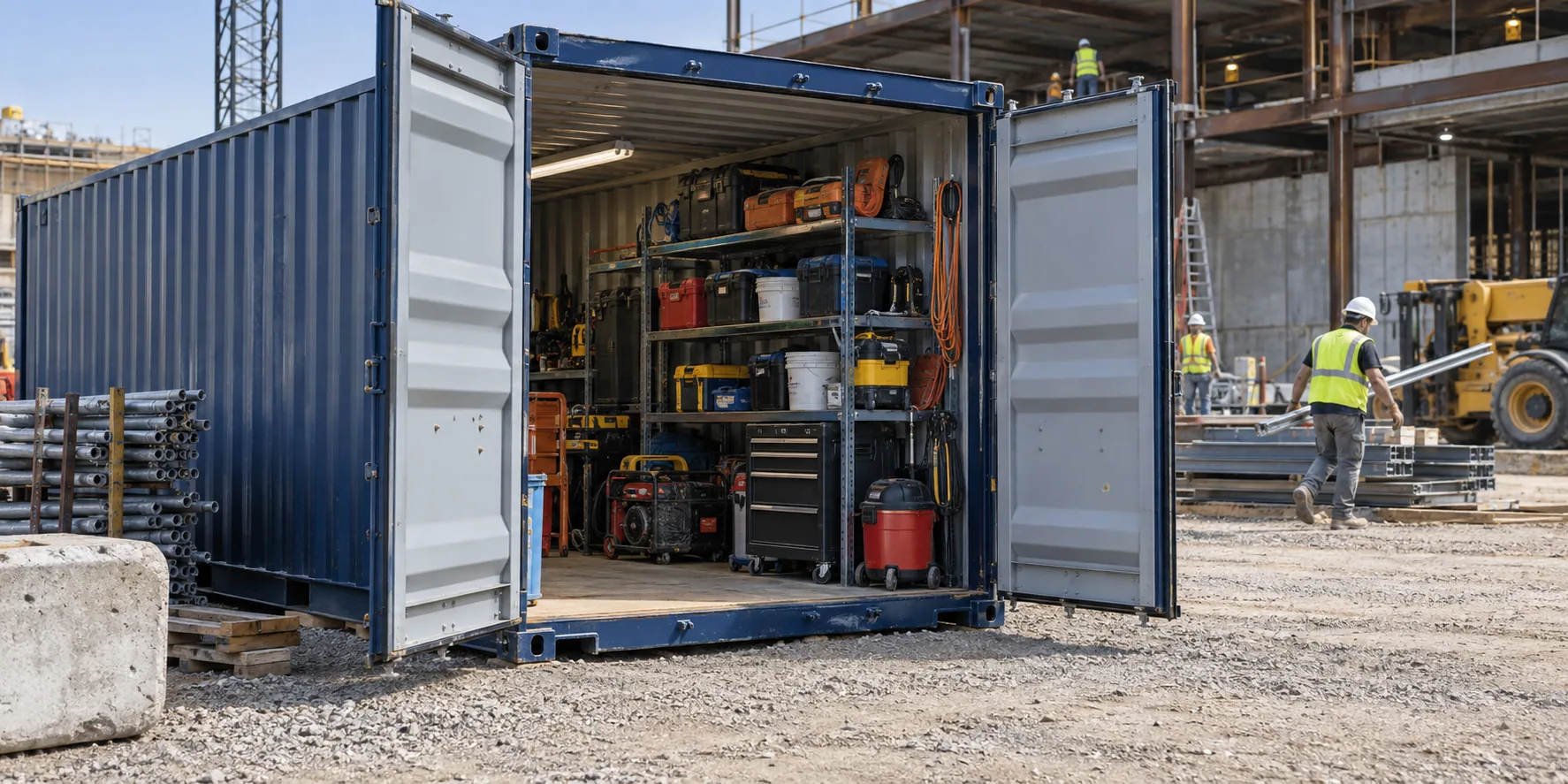
Confirm the desert approach
Check gates, soft shoulders, drainage channels and changing development roads, then mark door direction. See current container prices.
Own only recurring capacity
Lease development work. Buy recurring aerospace, contractor or landscape storage; larger shops may favor steel buildings.
Fit desert storage to the property
Measure gates and trailer room and identify washes, utilities or soft shoulders before placement. Heat-sensitive inventory needs shade, ventilation, insulation or conditioning appropriate to the contents.
Select contents for desert storage conditions
Construction, aviation-support and landscape stock should be separated by handling and environmental requirement. Rugged tools may suit ordinary storage, while electronics, finishes and controlled materials need a closer review. Compare shelving and long pieces with the door and interior dimensions. Keep an aisle and frequently retrieved goods forward. Heat protection should follow the contents, not a general assumption that vents or an exterior coating will make every product safe.
Coordinate communities, facilities and open yards
Check gates, credentials, overhead lines, washes, soft shoulders and the final trailer pull. Managed properties may require screening and specific delivery hours. Lease for development, events or seasonal equipment with pickup protected. Buy for recurring contractor or service-yard use with approved placement. Review ventilation questions before loading sensitive stock, and keep public, fleet and emergency routes outside the door working area throughout the use period. Keep retrieval clear when landscape crews and equipment share the yard.