Know what should not sit in uncontrolled heat
Electronics, adhesives, paper, furnishings and some packaged goods may need ventilation, insulation or conditioned storage. Select a size that leaves air and retrieval space. See current container prices.
Desert lots still require delivery preparation
Washes, soft shoulders, dust, gates and changing construction roads can limit the truck. Confirm a firm approach, turns and door orientation. See current container prices.
Keep equipment routes open
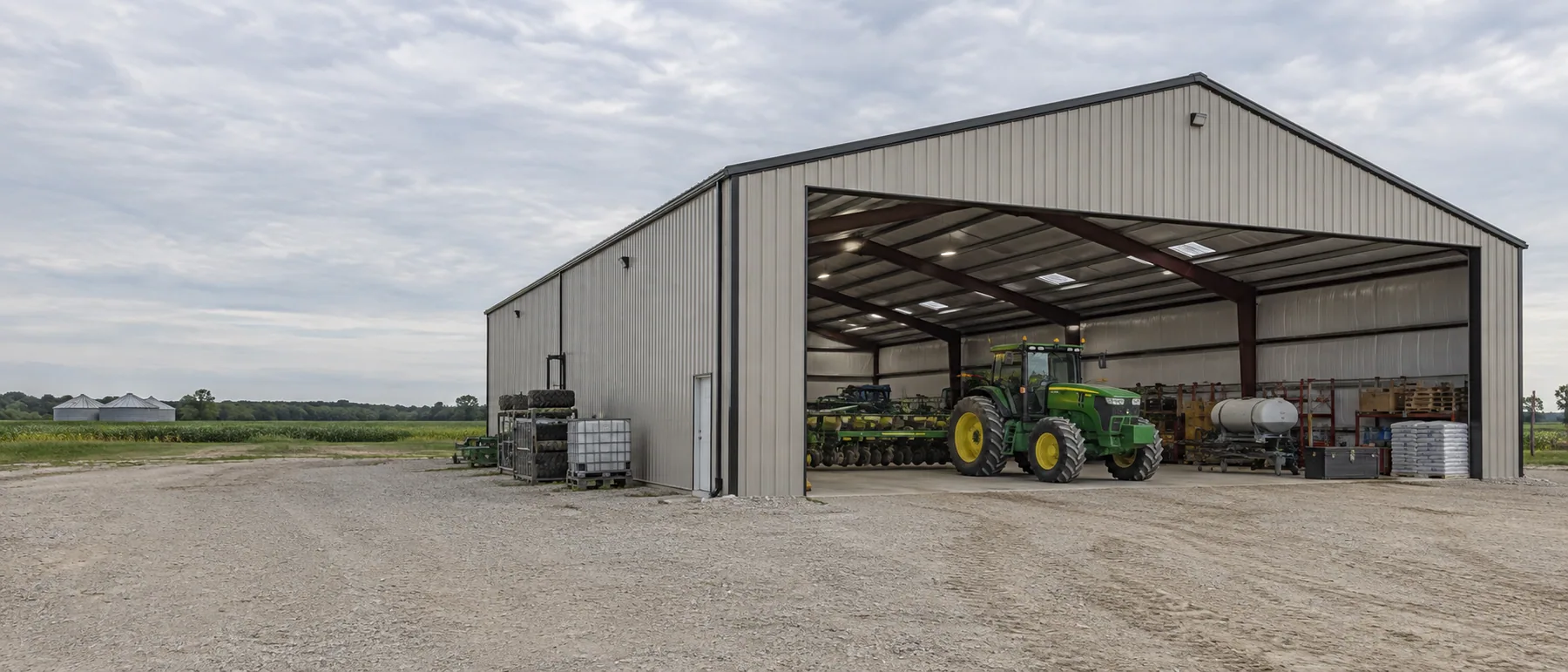
Place the unit outside fleet, landscape and emergency movement. Lease shipping containers for builds and peaks; buy for recurring service-yard use. A permanent shop may be better served by a steel building.
Heat suitability comes before secure capacity
Tool storage and rugged parts can be good container applications, while finishes, electronics, food or controlled materials require a closer review. Do not confuse closed doors with temperature protection. Discuss ventilation, insulation or conditioning around actual contents and working hours. Use the usable dimensions to preserve an aisle and avoid overpacking. Shade can help the site layout, but it must not introduce tree, structure or utility conflicts for delivery and pickup.
Make the desert approach part of the quote
Identify washes, soft shoulders, dust, grades and overhead lines from the public road to the pad. An open parcel can still have an unsuitable trailer path. A lease fits development phases and seasonal equipment; buying fits a settled contractor or landscape yard with recurring demand. Check local placement requirements and keep fleet and emergency routes open. The answer on container placement provides a practical starting checklist.