Separate clean or sensitive material from ordinary stock
Clarify packaging, temperature and contamination requirements before selecting a unit. For suitable contents, use the shipping container working dimensions to maintain organized racks and inspection access.
Follow facility controls
Confirm badging, delivery windows, gate procedures, overhead clearance and the approved surface. Keep the placement outside process, chemical-response, pedestrian and fire routes.
Use the actual project horizon
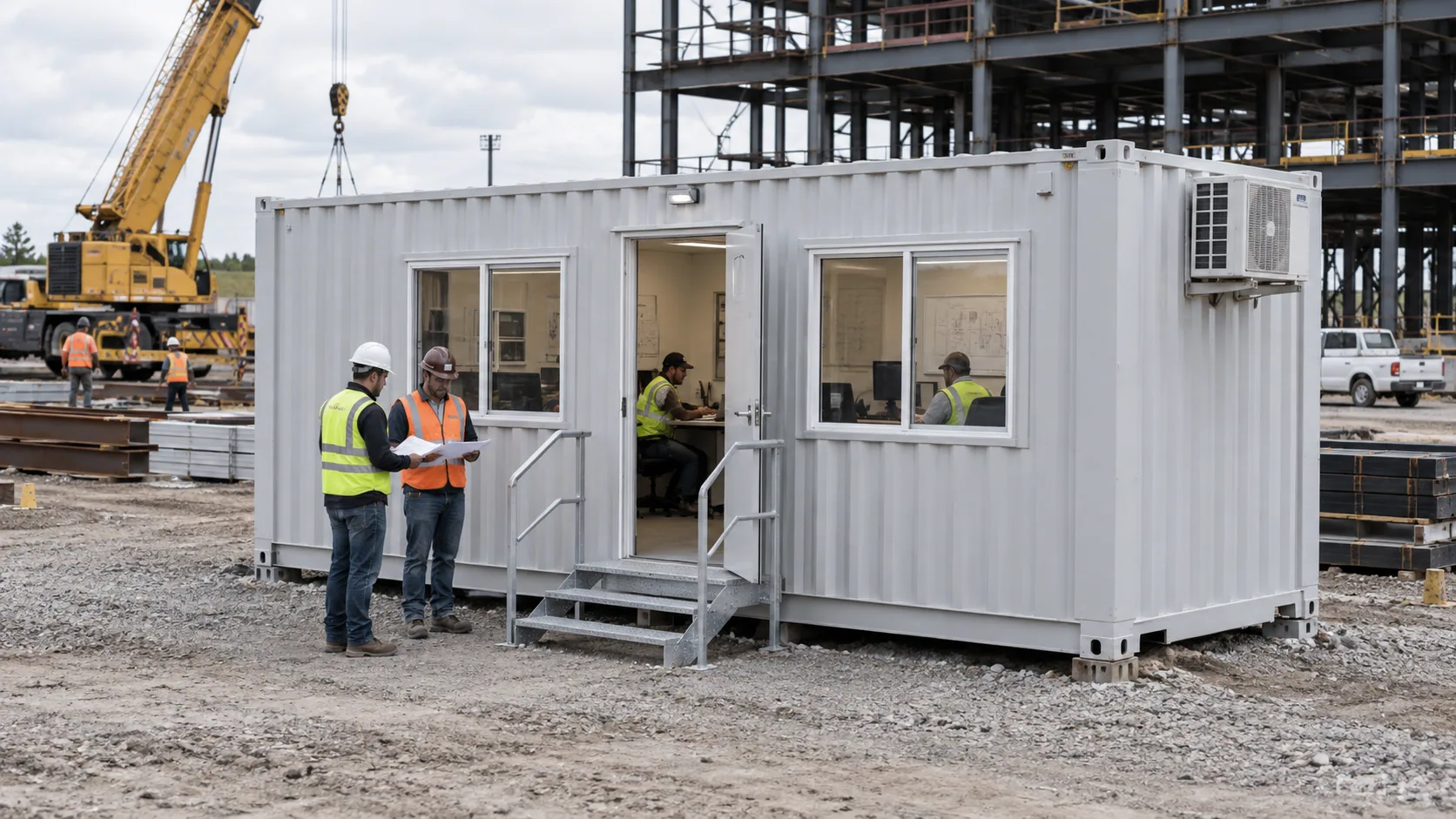
Lease shipping containers for expansions and build-outs. Purchase for recurring contractor or facility storage, and use a mobile office when personnel need occupied space.
Let facility personnel approve the contents
Semiconductor and technology projects may involve contamination, temperature, battery or chemical requirements that ordinary storage does not satisfy. Separate those items from suitable tools and packaged material before requesting a unit. Use the interior dimensions to preserve labeled zones and inspection access. Document any ventilation, conditioning or power requirement clearly. A temporary container should improve project material handling without moving a sensitive process requirement outdoors and leaving its controls undefined.
Follow the secured-site delivery procedure
Confirm badging, escorts, delivery hours, gates, overhead clearance and the approved door direction. Keep process, pedestrian, utility and fire routes open. Leasing can support an expansion or equipment transition with pickup protected through later improvements. Purchase fits recurring contractor or facility storage with maintenance and modifications controlled. Review modification options before permanent fittings, and compare occupied project space with a mobile office rather than using a storage layout as finished workspace.