
Organize for field and facility crews
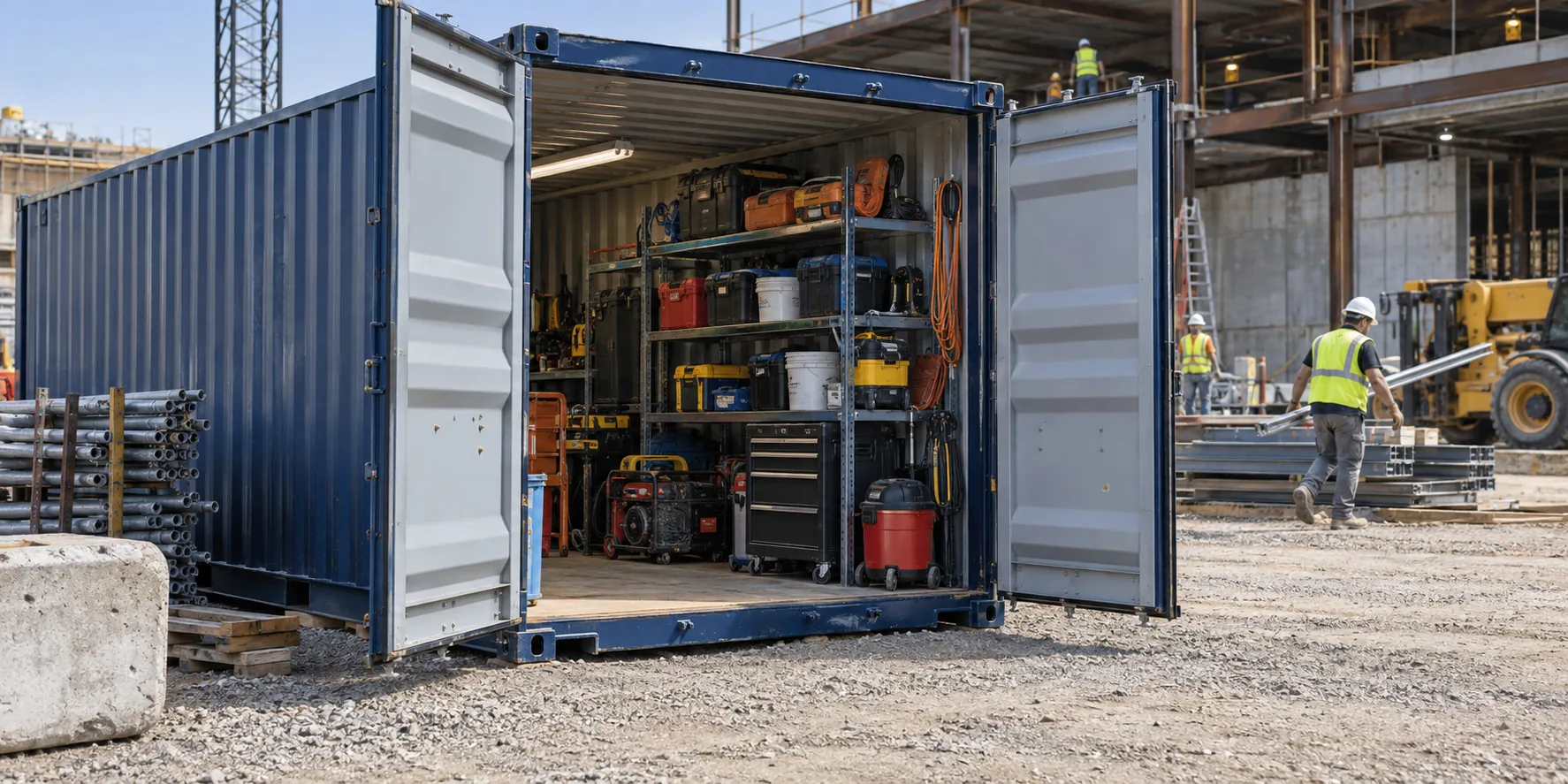
Separate project materials from high-turn service parts, protect an aisle and use the shipping container working dimensions for shelves and long equipment.
Check the grade before choosing length
Review curves, gates, overhead trees, rain-softened ground and trailer pull room. On campuses or plants, coordinate security, pedestrians, docks and shift traffic.
Keep the arrangement proportional
Rent shipping containers for renovations and seasonal outdoor inventory. Purchase for recurring utility, manufacturer or contractor needs with a maintained pad.
Match contractor storage to a hilly service area
Knoxville renovation and service crews may have plenty of supplies but a restricted driveway or sloping approach. Photograph the route from the street to the proposed pad and measure the largest equipment case against the container dimensions. Group material by project so daily retrieval does not require unloading another customer’s stock. Protect finished surfaces from rough tools and keep returned equipment in a separate zone. Outside capacity should make the next dispatch simpler, not create another handling stop.
Keep water and later construction out of the position
Look at runoff paths and confirm that support remains firm after rain. The container doors need a usable landing, while the truck needs room beyond the box itself. Leasing suits a renovation or construction period when removal is included in the site plan. Ownership suits recurring contractor or facility demand at an approved yard. Recheck the pickup approach when landscaping, fencing or additional equipment arrives; the original delivery photographs are useful only if that path remains available.