Separate controlled equipment from general storage
Confirm security, temperature, cleanliness and handling requirements before assigning contents to a container. For ordinary parts and tools, plan racks and access with the usable dimensions.
Follow site security without disrupting operations
Document gate procedures, delivery windows, escorts, overhead clearance and the approved door direction. Keep process, test, flightline and emergency routes clear.
Match the unit to contract duration
Shipping container leasing fits a defined program or construction phase. Buying fits recurring manufacturer or contractor support where modifications, maintenance and placement are controlled.
Qualify program equipment before selecting ordinary storage
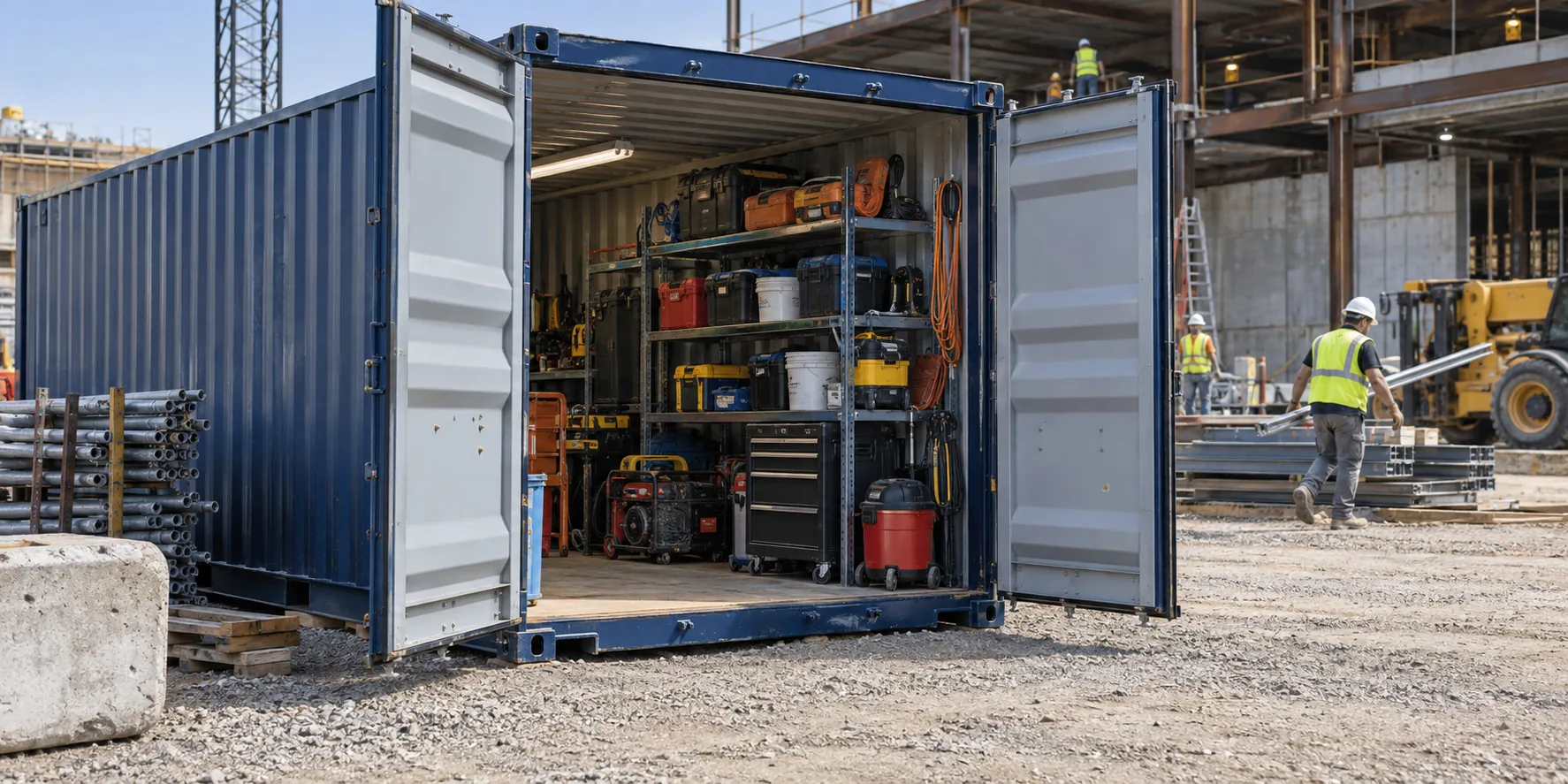
Aerospace, defense and research projects can involve traceability, cleanliness, temperature or security requirements beyond a standard unit. Have the responsible facility team approve contents before choosing racks, power or vents. Suitable tools and packaged parts can then be organized by program or work package using the usable dimensions. Retain inspection access and clear labels. A temporary storage solution should improve accountability without moving controlled equipment outside and leaving its handling or environmental provisions unresolved.
Integrate delivery with the secured industrial site
Confirm badges, escorts, gates, delivery windows, overhead clearance and the approved door direction. Preserve test, process, utility and emergency routes. Rent for a defined program or expansion with pickup protected; buy recurring manufacturer or contractor capacity with maintenance and modifications controlled. Review modification guidance before permanent fittings, and compare occupied field needs with a mobile office rather than treating material storage as finished staff workspace.