
Lay out parts for the people issuing them
Separate high-turn maintenance stock from bulky project material, retain an aisle and check racks against the shipping container interior dimensions. Do not mix farm chemicals or other controlled materials with ordinary tools without proper review.
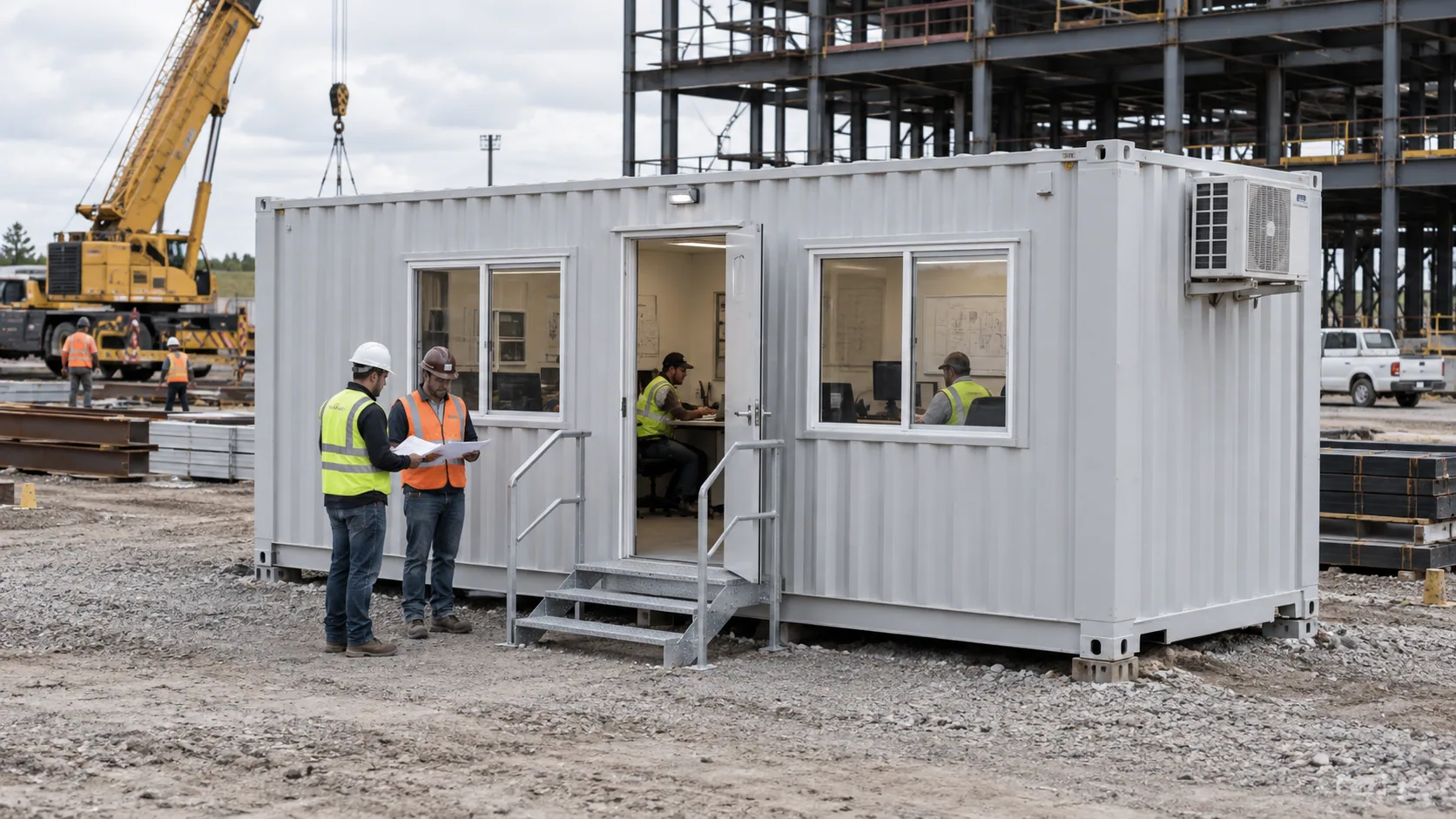
Prepare for wind, winter and rural approaches
Check gates, culverts, gravel strength, overhead lines and snow-removal space. On a campus or plant site, coordinate security, pedestrian routes, docks and shift traffic instead.
Use duration and repeat demand to decide
Renting fits construction phases, moves and seasonal peaks. Buying fits continuing manufacturer, farm-service or facility storage; broad machinery bays may be better served by a steel building.
Put winter access into the rural site description
A farm-service or contractor property needs more information than a street address. Include gates, cattle guards, culverts, gravel condition, overhead lines and a place for the trailer to straighten. Consider how the route will look during snow or thaw at pickup, not just delivery. The preparation checklist helps define stable support and drainage. Preserve equipment and livestock routes instead of placing the unit in a convenient turning or snow-storage area.
Use a stock map for campus and service work
Institutional fixtures belong by room or phase; maintenance parts belong by system and issue frequency. Compare shelving and large pieces with the inside dimensions. Separate incompatible agricultural materials and identify anything needing environmental controls. A lease can follow construction or a seasonal peak, while ownership fits settled recurring storage with assigned upkeep. For broad machinery doors and covered repair work, compare compact secure storage with a steel building before committing to a cargo-width layout.