
Keep inventory accountable
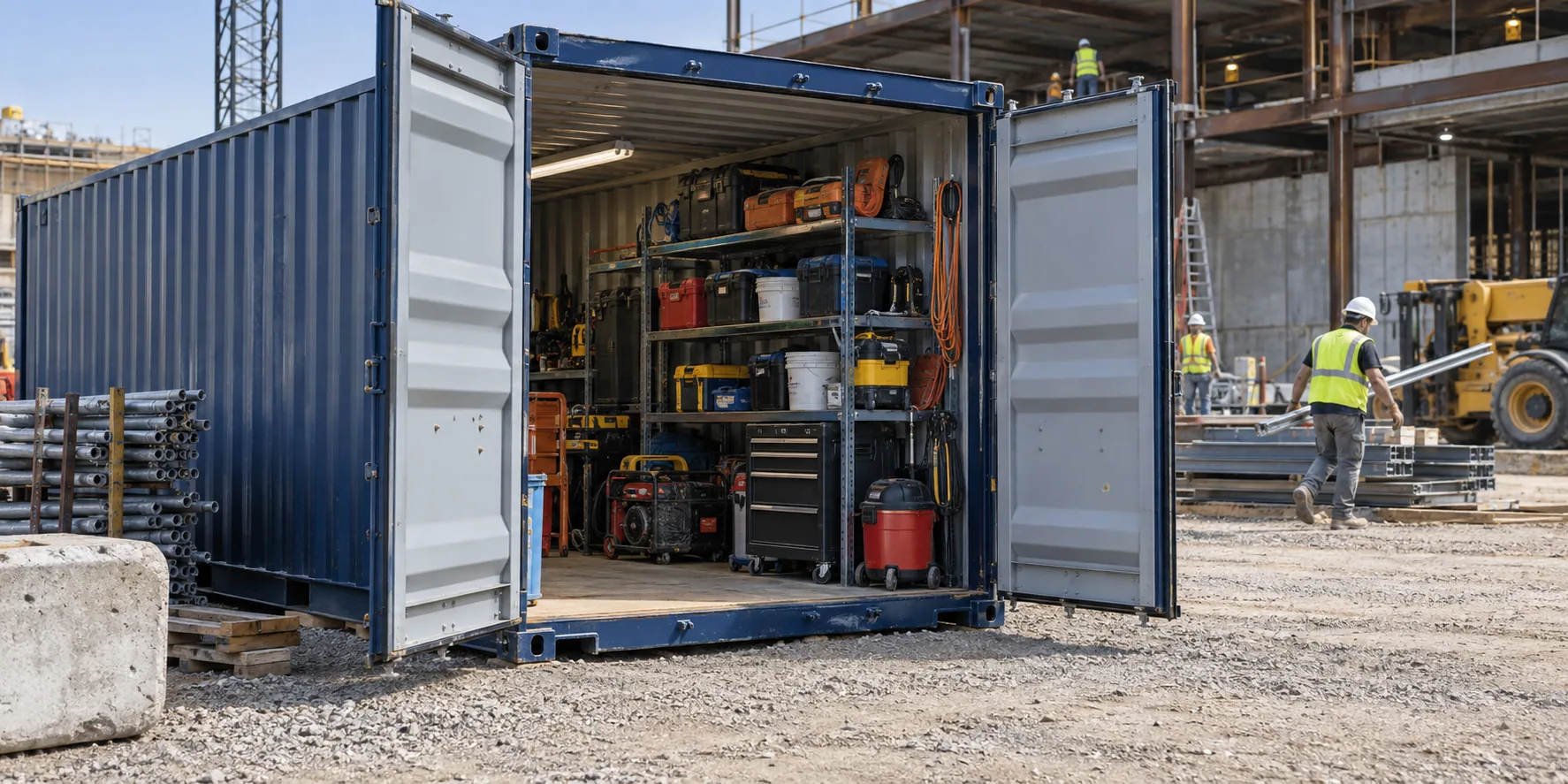
Zone parts and packaged goods by velocity and preserve an aisle, checking the shipping container working dimensions. See current container prices.
Plan around port and urban movement
Confirm routes, gates, curbs and the trailer pull while protecting docks, rail and emergency access. See current container prices.
Secure without trapping
Coordinate fences and gates with pickup. Lease projects; buy recurring logistics or industrial storage.
Respect port traffic and neighborhood edges
Terminal and industrial sites need gate and freight coordination, while mixed-use blocks add curb and pedestrian constraints. Inspect coatings and preserve emergency access near the waterfront.
Separate industrial storage from cargo-handling assumptions
Port-connected businesses should label static stock by release status or work order and retain clear inspection access. Heavy parts belong low, and racks should fit the interior and cargo doors. Sensitive goods may require environmental or security provisions beyond an ordinary box. Do not assume a container placed for storage can later be moved loaded without equipment, weight and structural review. The planned handling method belongs in the specification from the start.
Respect waterfront logistics and neighborhood access
Industrial sites add rail, cranes, truck queues and credentials; mixed-use properties add curb controls and pedestrians. Confirm the complete approach and preserve fire and utility routes. Lease for contracts or construction with removal protected through site changes. Purchase for recurring contractor or port-support use with drainage and coating inspections assigned. The delivery guide helps distinguish an available storage footprint from the larger space needed by the placing truck.