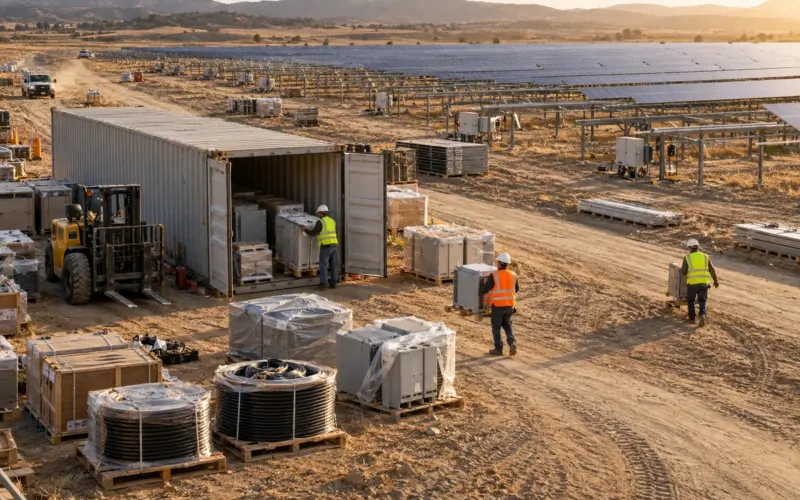

Utility crews lose time in small pieces: a fitting left at the laydown yard, a reel delivered to the wrong work front, or a specialty tool locked in somebody else’s truck. Utility contractor storage containers give expensive gear a fixed address near the work, but only when the box is planned around the crew’s day rather than filled from the doors backward.
List what must stay dry, what needs controlled access and what requires mechanical handling. Cable reels, trench shields and long sections may need open yard space, while meters, fittings, hand tools and packaged electrical material fit an enclosed unit better. Use the container size and door chart to check the longest item and the handling aisle before a supplier recommends a box.
Assign the container to the work front
A utility project moves. The storage plan should show whether the unit stays at one staging yard, follows the crew or transfers between phases. Moving a loaded rental may require supplier coordination, so include relocation in the quote instead of assuming a driver can pick up a full container on a phone call. The container rental guide outlines term and service questions worth settling before mobilization.
Inside, divide stock by crew or system. Keep emergency repair material separate from routine installation stock, and give serialized tools a sign-out point near the entrance. A superintendent should be able to open the doors and see whether the day’s package is complete. For broad tool-and-material use, the jobsite storage overview adds placement ideas for active sites.

Keep truck access clear as the project changes
Walk the delivery route after rain and after normal site traffic has parked. Check gate width, overhead lines, soft shoulders, turning room and the straight pull-away path. A pad that can hold a container does not guarantee that the delivery truck can reach it. Review container delivery space with the supplier and name an onsite contact who can clear the route.
Plan collection while the civil work is still on paper. New poles, spoils, barriers or paving can trap a unit that was easy to deliver. Provide the same size, project term, relocation needs and access notes to each supplier, then compare utility storage prices. Add the container number and responsible foreman to the daily material plan so questions reach the right person. The right utility contractor storage containers keep accountable equipment close to the crew without turning the work zone into another crowded yard.