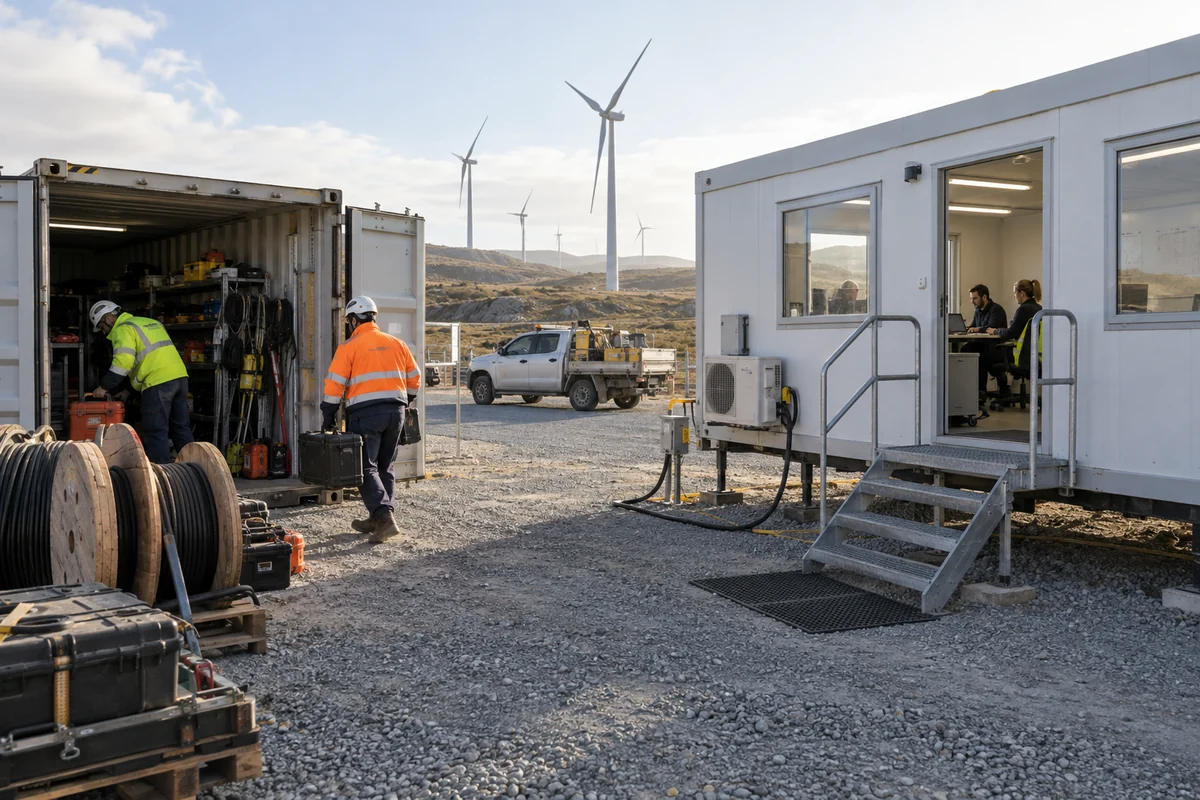
A storage container and a project office may share the same yard, but they are built to do different work. The useful shipping container versus mobile office decision begins with one question: will people occupy the space for regular work, or will they open it briefly to retrieve tools and material? See current container prices.
If the answer is desks, meetings, plan review or daily administration, price an occupied workspace. If the answer is pallets, fixtures, parts or equipment, price secure storage. Trying to turn the cheaper quote into the other product later can create problems with comfort, power, access and site approval that should have been settled before delivery.
Choose storage around the contents
For material storage, consider item dimensions, door opening, shelving, aisle width, moisture sensitivity and how often crews need access. The shipping container size guide helps compare basic footprints, while the equipment storage page covers layouts for tools and machinery. Confirm whether rental or container purchase better fits the term and planned changes.
A standard dry container is not automatically a conditioned room. Contents that require controlled temperature, humidity or ventilation need a solution specified for those conditions. Likewise, ordinary container doors may be fine for occasional access but awkward for steady foot traffic. Start with what goes inside and how it will be used, not with the outside appearance.
Choose an office around people and site requirements
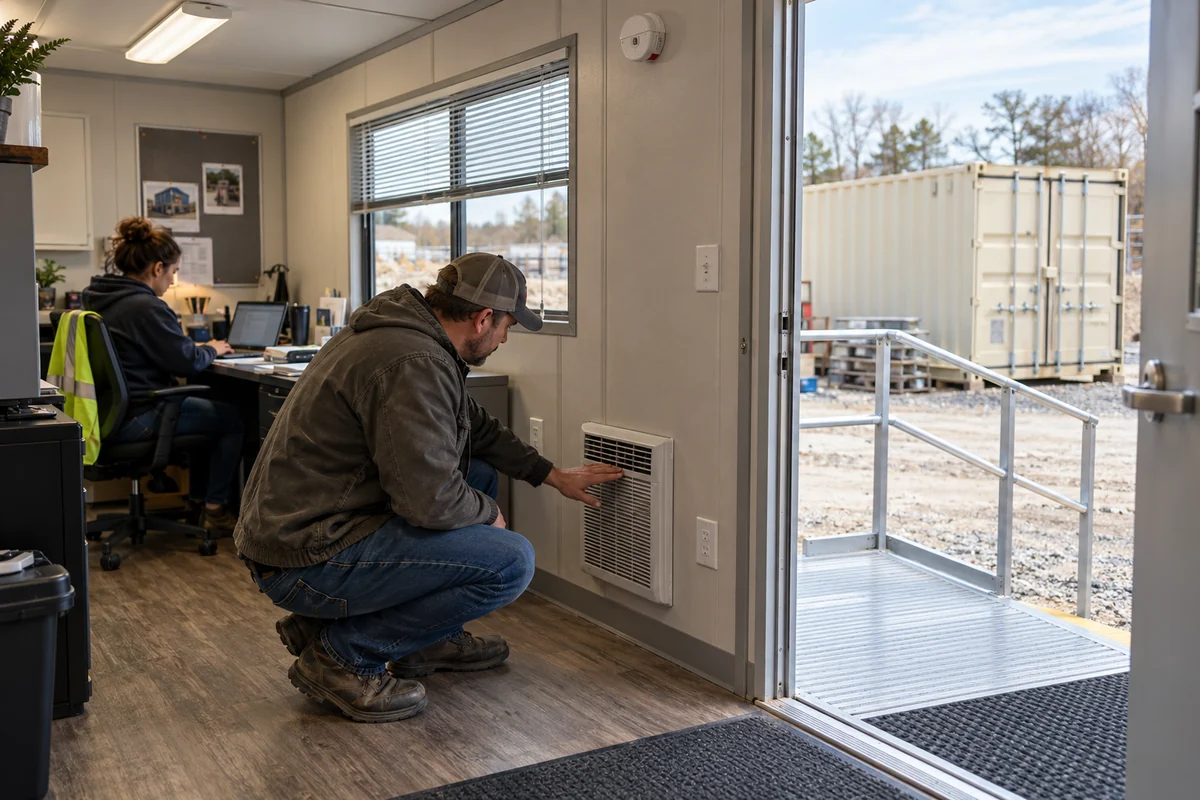
A mobile office is intended to support occupied work with the appropriate entry, windows, lighting, power, heating or cooling and interior arrangement for the selected unit. Discuss headcount, hours, accessibility, steps or ramps, restrooms, utility connections and local permit needs. A project trailer used by ten people all day has different requirements from a quiet one-person check-in point.
Placement changes too. Staff need a safe walking route, reasonable access from the work area and separation from heavy traffic, dust or noisy operations. Storage may sit closer to material handling, but that position could be a poor office. If both functions are required, two purpose-selected units often work better than forcing desks and valuable stock to compete behind one set of doors.
Describe the people, contents, term, utilities and site access, then compare temporary site-space prices. Review the rental planning guide for term questions. Keep occupancy needs separate from the material list. A clear shipping container versus mobile office choice gives crews the room they actually need and prevents a temporary setup from becoming an improvised fix.