
Protect institutional and food-adjacent loads
Separate ordinary fixtures and maintenance goods from anything needing controlled temperature, sanitation or special handling. Check the storage zones against the available floor and door dimensions.
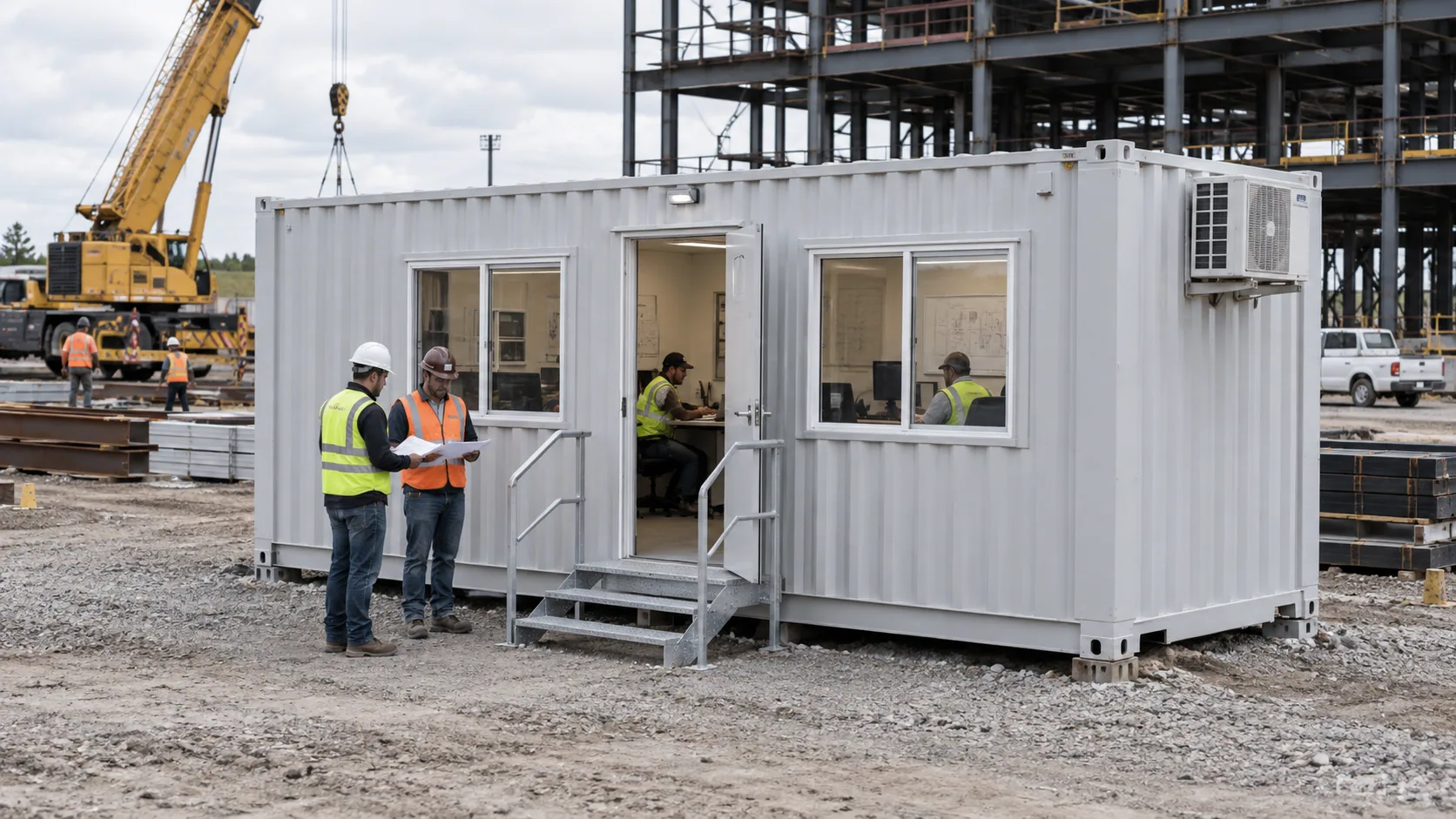
Coordinate campuses, lakes and snow routes
Confirm delivery windows, pedestrian controls, security check-in and plowing access. Do not place the unit where meltwater, roof runoff or emergency circulation will create a later problem.
Use temporary capacity intentionally
Lease shipping containers for renovations, events and seasonal inventory with a clear off-rent plan. Purchase for recurring facility, manufacturing or contractor storage.
Campus logistics deserve an approved storage plan
University and healthcare sites should identify the delivery window, security check-in, approved surface and pedestrian controls before ordering. Mark the truck pull and door working area on the project plan. Snow storage and meltwater paths need room too. Compare available footprints with the space the facility can actually release, rather than inventory demand alone. A compact organized box may be preferable where service vehicles, emergency access and public routes already compete for room.
Separate ordinary supplies from controlled materials
Fixtures, maintenance tools and packaged goods can differ from food, laboratory or medical stock in sanitation and environmental requirements. Confirm suitability first, then arrange retrieval by room or project phase. Leasing fits renovations and events with planned pickup; purchase fits recurring facility or manufacturer use with upkeep assigned. Review condensation controls for seasonal swings, keeping dry inventory raised and damp returned equipment outside clean storage zones.