A workable footprint beats maximum capacity
Measure the largest tool, pallet or fixture, then leave space to retrieve it. On a tight shared property, a shorter unit that can be placed without taking over parking or a fire lane can be more productive than a packed 40-footer. Review the common shipping container sizes before committing.
Wasatch Front access needs a real check
Grades, winter weather, dense development and gated commercial properties can restrict the trailer’s straight pull. Confirm turns, overhead lines, surface strength and the direction the doors need to face. Photos help, but measurements and a supplier review are better.
Fit storage into a shared site
Keep tenant entrances, pedestrian routes, snow storage and emergency access open. A clean screened position is often easier for a property owner to approve. Crews needing an occupied field room should also review mobile office options instead of assuming a storage conversion is the simplest route.
Project storage or a permanent asset?
A leased container suits a build-out with a clear end date and accessible pickup route. Ownership can fit an established contractor, landscape company or service operation that expects repeated use and approved modifications.
On a tight development site, work through delivery-space requirements before choosing the longer box.
Stage trades and business supplies for quick retrieval
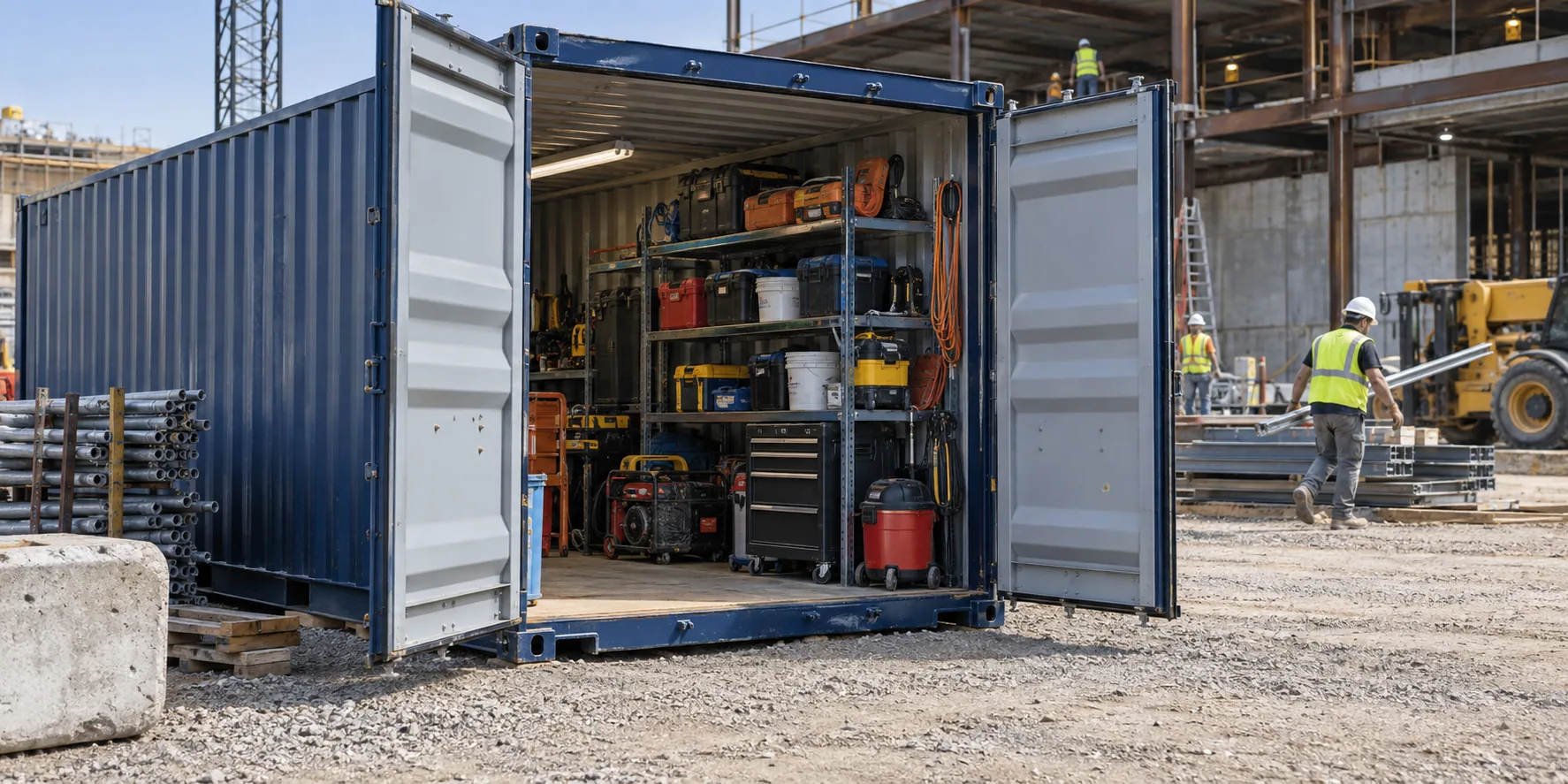
Orem contractors and commercial facilities can use outside storage for suitable tools, fixtures and reserve supplies. Group material by job, keep checked equipment apart from returns and load installation packages in the order crews need them. Verify long pieces and packed cases against the cargo opening. A clear aisle should be part of the capacity estimate, not sacrificed after the first shipment. Temperature-sensitive electronics or finishes need their own environmental review before they are assigned to ordinary dry storage.
Check the position in winter and busy hours
Shared commercial lots can need customer parking and delivery access even when a corner looks available. Confirm the unloading appointment, final truck movement and where snow will be piled. Container leasing suits a defined build-out or demand peak. Buying fits recurring use where long-term property permission and maintenance are clear. Keep support and drainage accessible for checks, and reserve the pickup route so later fences, stored equipment or landscaping do not trap the unit in place.