Make overflow support the warehouse
Zone inventory by movement rate and preserve forklift-safe retrieval outside the box. Compare pallet count, rack height and door clearance with the usable container measurements.
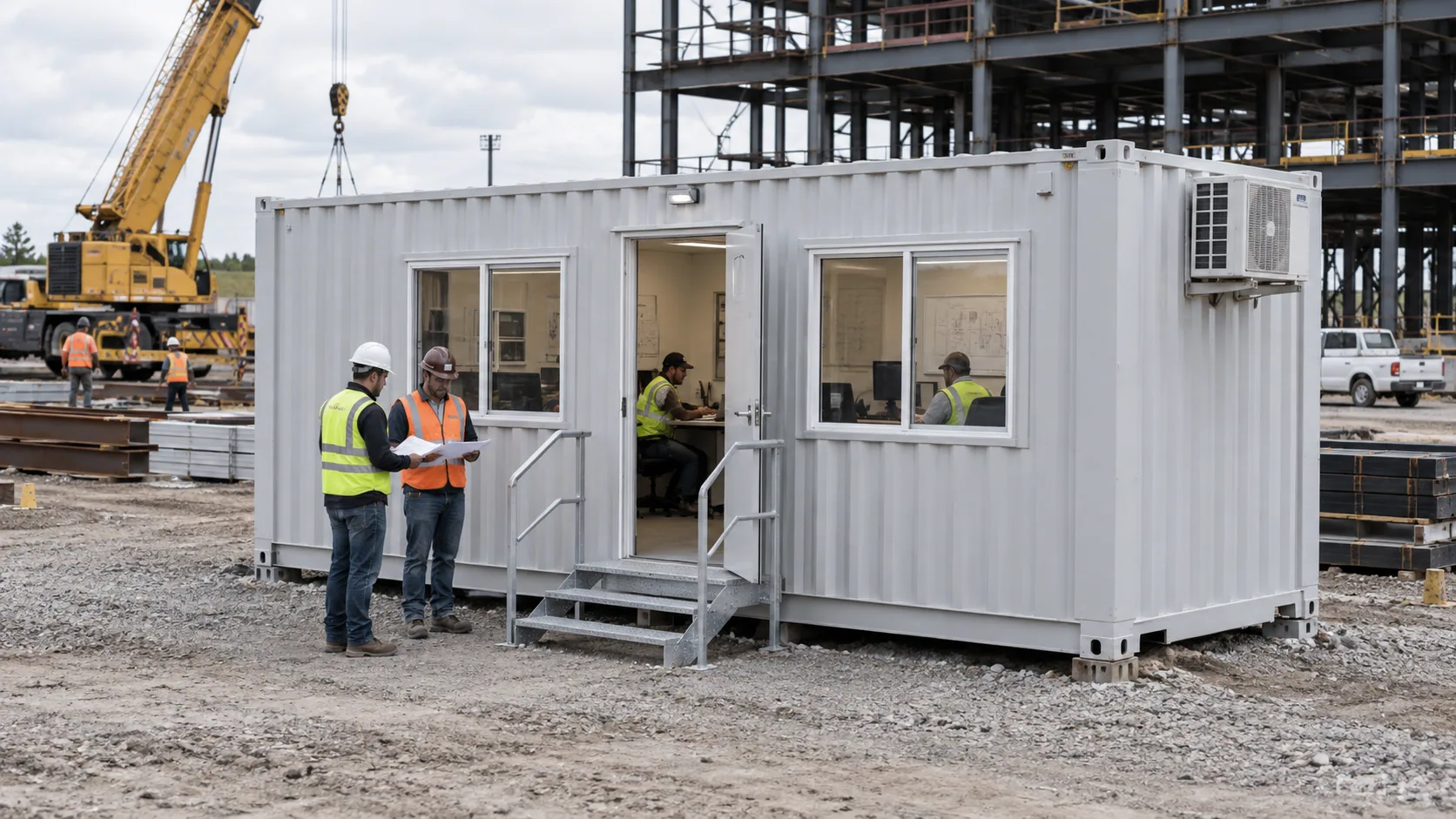
Heat changes what belongs inside
A steel container is not climate control. Identify adhesives, electronics, finishes and other sensitive contents before choosing ventilation, insulation or conditioning. Keep the pad drained and accessible for inspection.
Schedule around live freight
Coordinate gate check-in, trailer turns and fire lanes before delivery. Lease shipping containers for peaks and projects; buy when the logistics or service operation needs continuing capacity and will maintain it.
A logistics pad must preserve trailer circulation
Ask yard operations to mark hostler routes, trailer parking, dock approaches and fire access before selecting the storage position. Gate procedures and delivery windows should be included in dispatch notes. A large property can still offer very little safe unloading space during a busy shift. Match the available working envelope with the container footprint, and orient doors toward a controlled retrieval area rather than a lane used continuously by trucks or forklifts.
Make outside inventory as visible as indoor stock
Retain SKU, customer and release-status labels, with an aisle that permits inspection and efficient issue. Heat-sensitive goods require a specific environmental decision. Leasing can absorb volume peaks or construction periods without permanent equipment; purchase fits continuing logistics capacity where maintenance is assigned. Review quote requirements so offers include the same condition, transport, access and term assumptions. Protect the future pickup route as warehouse layouts and perimeter barriers evolve.