
Build a safe parts layout
Store dense components low, separate regulated materials and preserve an aisle. Confirm the load against size and floor-space guidance.
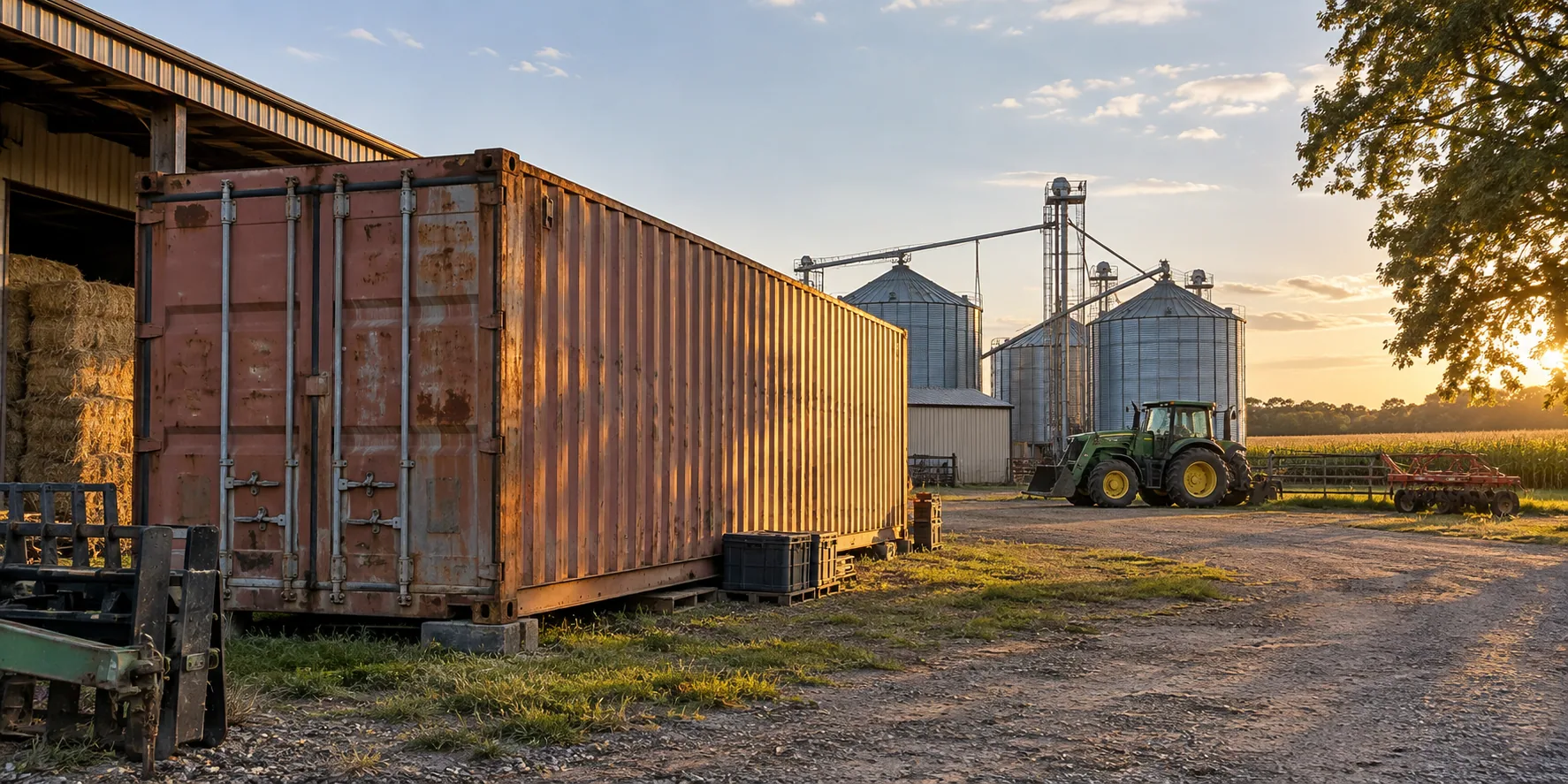
Mark the complete truck path
Check gates, soft shoulders, utilities, turns and wind exposure. Keep fleet, aircraft-support and farm routes open.
Project storage or permanent equipment
Lease shipping containers for field work and builds. Buy for recurring operations; permanent shops may need a steel building.
Keep open yards from becoming unsafe yards
Map underground utilities, drainage, aircraft or fleet paths and emergency access. Wind-exposed placement should follow local requirements instead of relying on the container weight alone.
Keep aviation, energy and farm inventories distinct
Dense service parts, precision components and agricultural supplies need different storage rules. Separate contents by handling requirement and issue frequency, keep weight low and preserve inspection space. Check shelves and long items against the container dimensions. Controlled or incompatible materials require proper review before sharing a box. For broad machinery coverage or ongoing repair work, a steel building may better serve the operation than a narrow cargo footprint.
Use open land without losing safe circulation
Map drainage, underground utilities, gates, overhead lines and heavy-equipment movement before choosing the pad. Wind-exposed sites should resolve local placement requirements. Lease for field work, construction or a plant project while preserving pickup. Own continuing service-yard capacity with assigned condition checks. Compare the support plan with site-preparation guidance, and remember that an empty-looking corner can still be required for emergency response, fleet turns or future construction. Recheck the pad after grading or heavy equipment alters drainage.