
Organize marine and industrial supplies for inspection
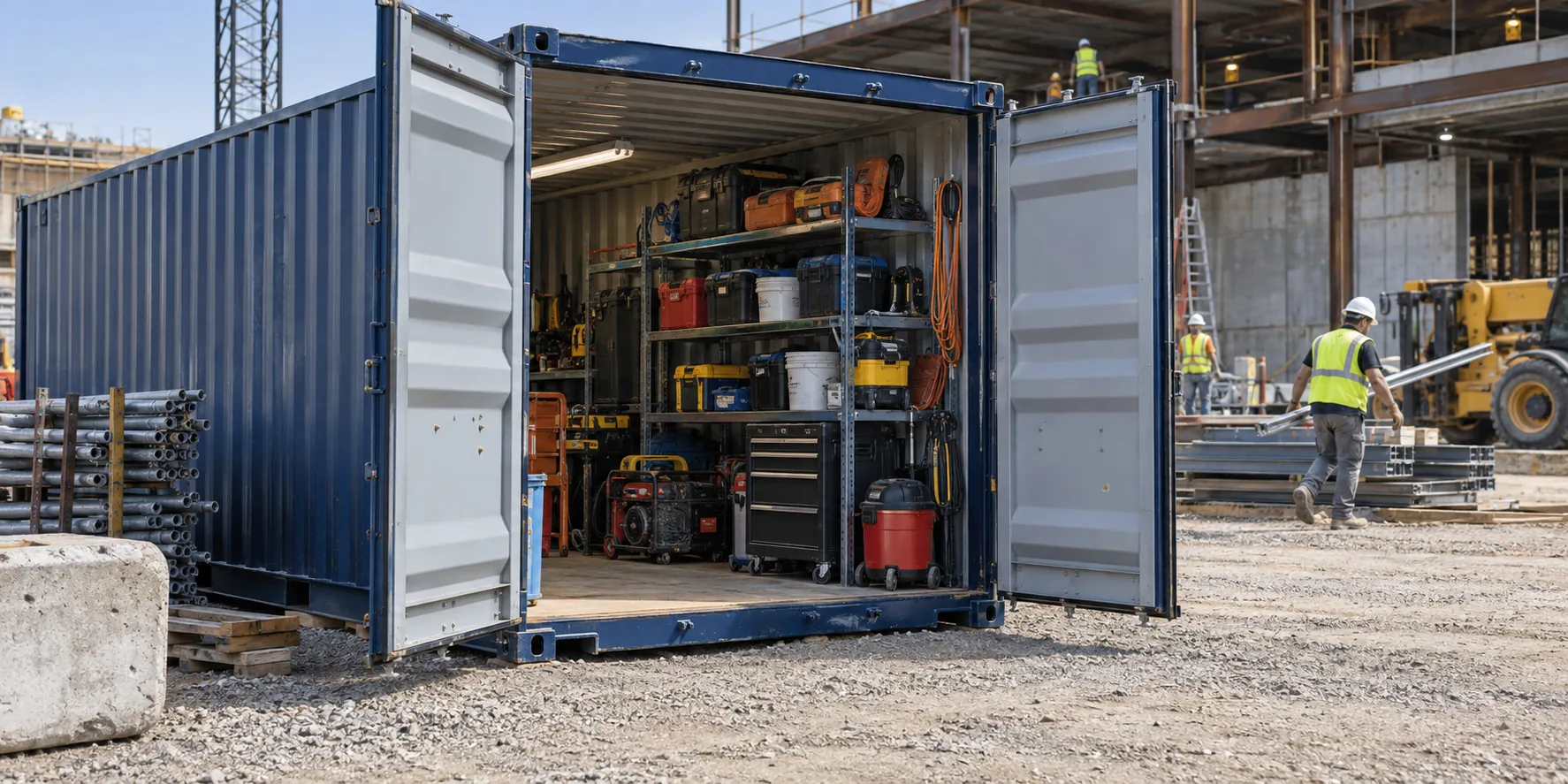
Group parts by vessel, system or work order and keep dense material low. Use the door and interior dimensions to preserve an aisle and safe handling.
Plan for ports, drainage and corrosion
Confirm credentials, rail, cranes, docks and truck routes. Inspect coatings and hardware, use stable drained supports and keep emergency and stormwater paths open.
Use the project term and exposure
Lease shipping containers for vessel work, construction and storm response. Purchase for continuing maritime or contractor storage with a defined corrosion-maintenance plan.
Create a marine-service stockroom with clear status
Mobile maritime and industrial contractors should identify tools ready for service and separate them from equipment awaiting inspection. Organize fittings and replacement supplies by job, retain an issue aisle and check long assemblies with packaging against the container dimensions. Ordinary secure storage can support marine work, but it should not become an improvised home for incompatible or regulated materials. Describe the load accurately so storage and handling options match the actual operation rather than a generic request for a box.
Give coastal maintenance a named owner
Salt residue, wet equipment and humid air make housekeeping and routine checks important. Keep access along the exterior to inspect coatings and hardware, and avoid positioning doors over a poor-draining work area. Leasing shipping containers suits a contract or overhaul with removal planned. Purchase suits recurring storage when someone maintains the unit and site. Confirm secured-entry arrangements and freight movement before dispatch, preserving enough truck access for future pickup as well as the original delivery.