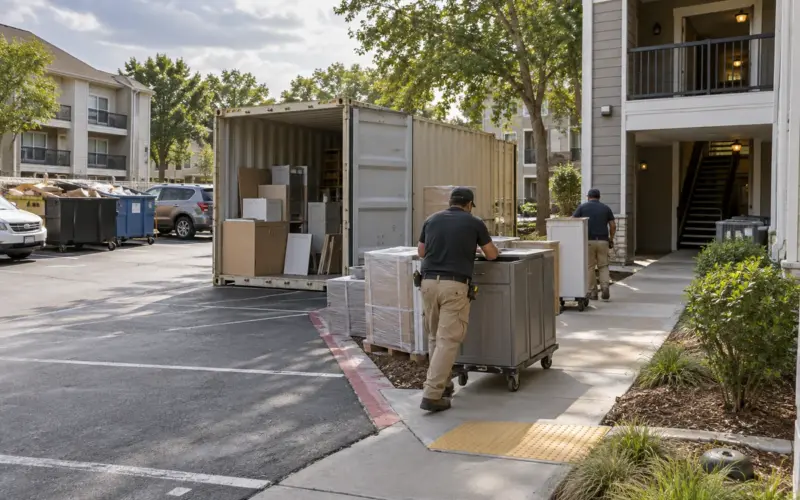
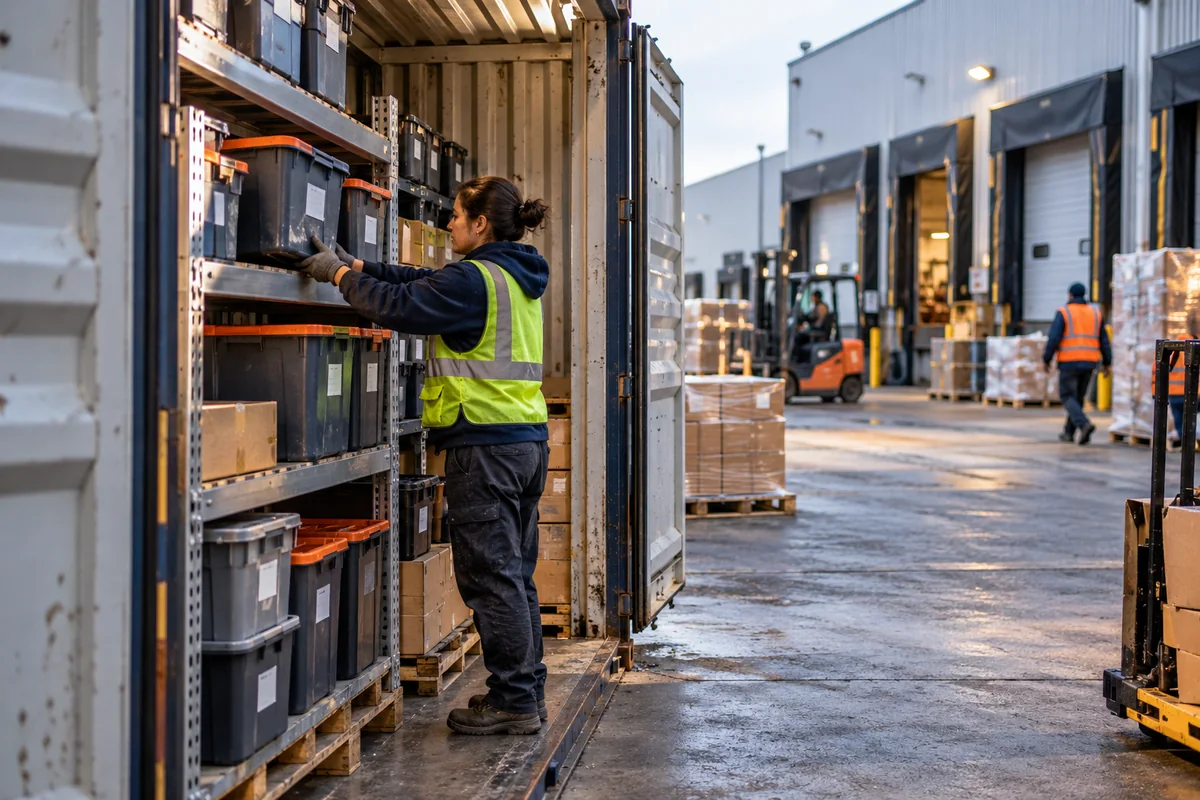
Overflow stock does not arrive in neat order. It shows up when the receiving team is already short on space, the dock schedule is full and purchasing has another truck due tomorrow. Warehouse overflow storage containers can add secure capacity quickly, but only if the outside storage plan respects the inside operation.
Separate what is slow from what is urgent. Reserve stock, packaging and maintenance items may tolerate a walk across the yard. Daily picks usually will not. If people have to unload half the container to reach one carton, the extra capacity has simply moved congestion from the aisle to the parking lot.
Give the container a job before giving it inventory
Choose one purpose for each unit: reserve finished goods, packaging, seasonal stock, MRO parts or project material. Then arrange by movement rate and weight. Keep heavy goods low, leave a usable aisle and protect cartons from contact with the floor or walls when moisture is a concern. The 20- and 40-foot size guide helps the warehouse team sketch rack depth, pallet positions and door clearance before anything gets loaded.
Count every touch. Material may be unloaded at the dock, carried to the container, pulled back for production and eventually returned to stock. That handling cost can erase the apparent savings from a poor location. A commercial storage container should sit close enough to serve the warehouse while staying clear of trailer noses, forklift crossings, emergency lanes and snow or waste operations.
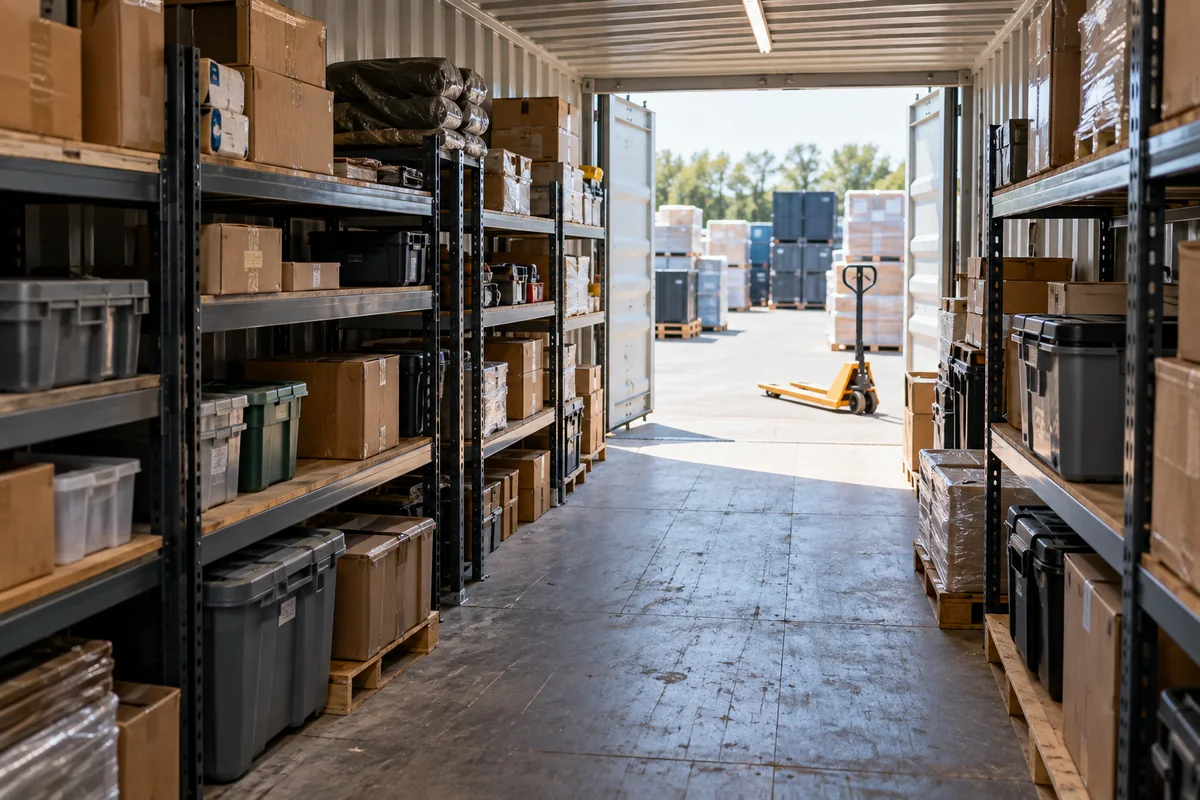
Decide whether the peak is temporary or permanent
If the need follows a season, promotion, project or delayed expansion, the container rental route keeps the commitment tied to the calendar. Recurring overflow may justify reviewing the container purchase guide, especially when fixed shelving or repeated annual use is involved. Neither choice fixes a broken inventory system, so set ownership, cycle counts and access rules along with the equipment.
Write an exit rule before the first load goes outside. It might be a date, a maximum pallet count or completion of a warehouse project. Without that trigger, overflow space tends to fill quietly and remain long after the pressure that justified it has passed.
Send suppliers the same size, term, delivery address and placement notes, then compare delivered container prices. Include pickup on a rental and condition on a purchase. The right warehouse overflow storage containers give the building breathing room without turning its busiest lane into a permanent obstacle course.