
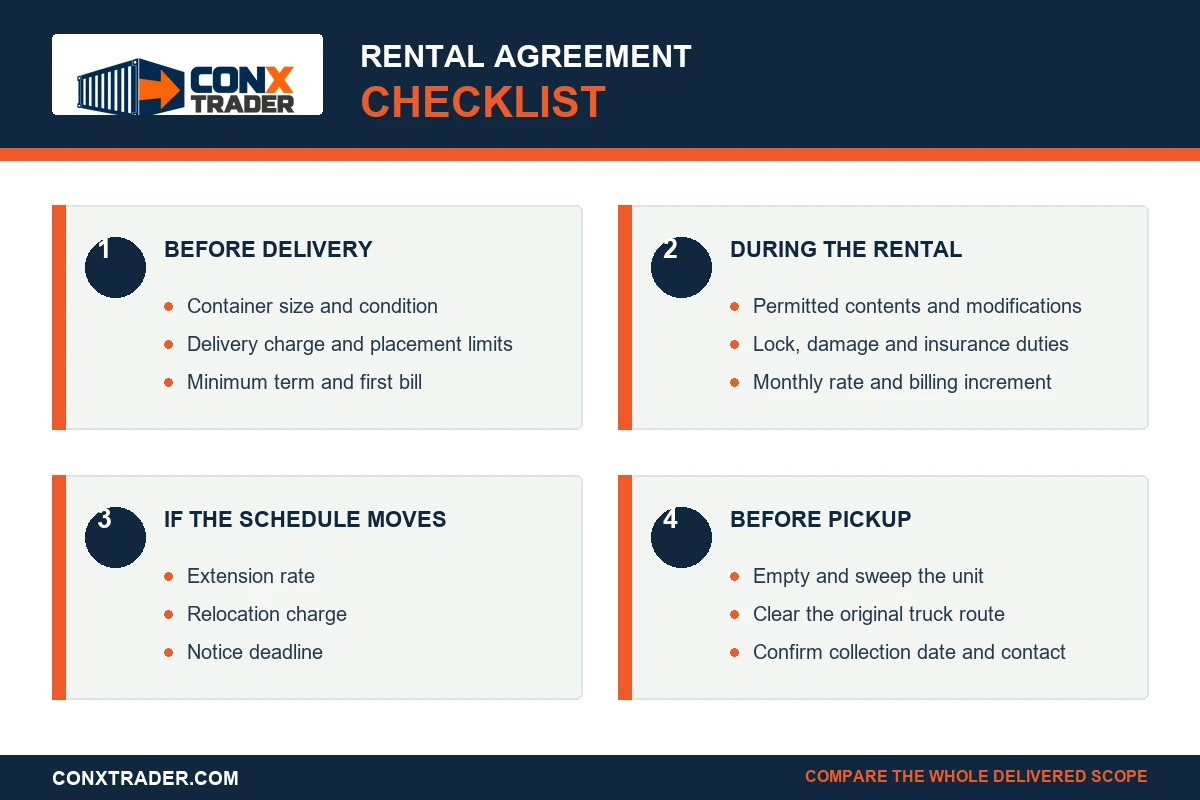
The fastest way to create an argument at the end of a rental is to leave the end of the rental vague at the beginning. Use a shipping container rental agreement checklist before the truck rolls, while there is still time to ask questions and change the order. See current delivered container prices.
Read the agreement with the project schedule beside you. A “monthly” price does not automatically explain the minimum term, billing date, partial month, renewal method or pickup notice. If the job may slip, write down the extension rate now. If it finishes early, find out whether the remaining minimum is still due. These are ordinary contract details, but they are where a short project can collect a long tail of charges.
Seven items that deserve a plain answer
- Equipment: size, door type, condition and any promised lockbox or accessories.
- Money: rent, delivery, pickup, deposit, taxes and possible access or wait charges.
- Timing: minimum term, billing cycle, extension price and off-rent notice.
- Site: who prepares the pad and who confirms the delivery route.
- Use: prohibited contents, alterations and rules for locks, shelves or power.
- Care: cleaning, damage reporting, weather checks and door operation.
- Closeout: empty condition, inspection, key handling and pickup access.
Do not treat delivery as a small line item. Confirm the address, the placement point and whether the quoted equipment can reach it. The container site-preparation guide covers supports, drainage and level placement, while the size guide helps verify that the unit will fit both the route and the intended load.
Match the paperwork to the actual conversation
If a salesperson says something important—free pickup after a certain term, a specific delivery window or an included lockbox—make sure that promise appears in the written order. The container question library can help you identify gaps before signing. For a project rental, the jobsite storage guide adds practical questions about access, trades and changing site conditions.
Assign one person to manage the rental after delivery. That person should know the account number, notice rule, supplier contact and planned removal date. When everybody assumes somebody else called the unit off rent, the extra invoice is usually the first proof that nobody did.
Keep photos of the unit when it arrives and report a problem promptly through the method named in the agreement. Near the finish date, clear the truck route before requesting pickup. Use the shipping container rental agreement checklist to settle the scope, then compare container rental prices with every supplier quoting the same facts. A fair comparison starts with identical requirements, not identical-looking monthly numbers.