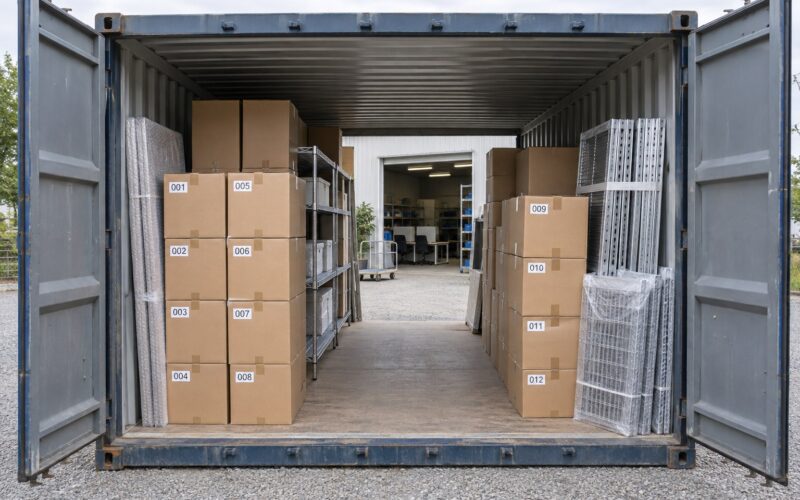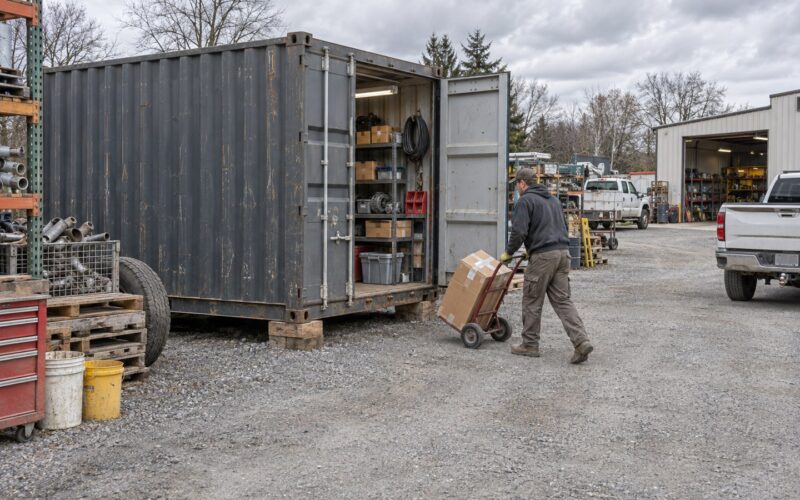
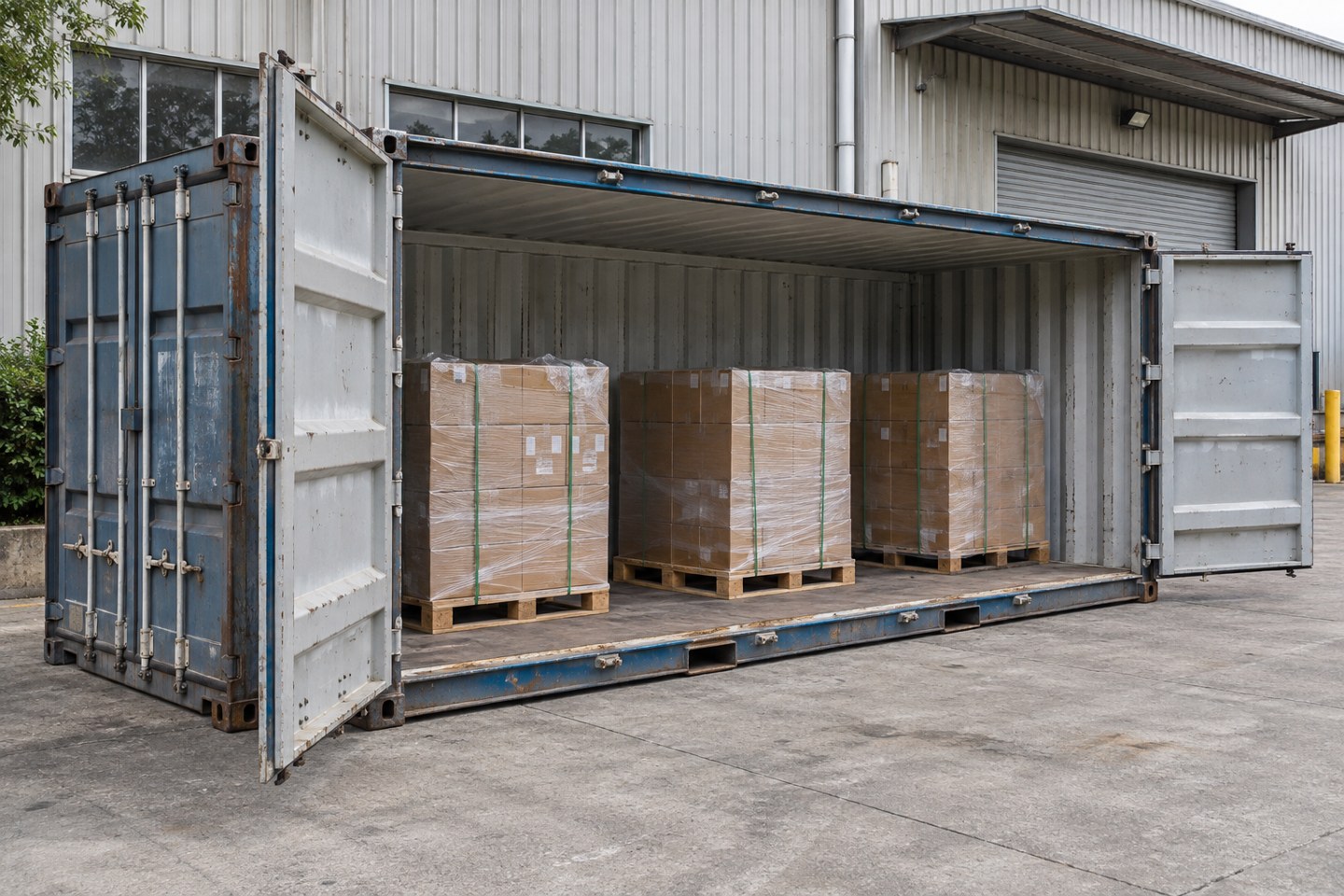
Open-side container rental can make bulky stock easier to reach, provided the site has room to use those side doors. Before requesting open-side container rental prices, measure the loading area beside the container as carefully as its footprint. A side-opening design loses its advantage when a fence or parked vehicle blocks the working side.
Confirm the exact model and local availability before planning around it. An open-side container has access along a long wall; it isn’t simply a standard container with its end doors opened wider. Review container sizes with the supplier and request actual door-opening measurements for the unit offered. See current container rental prices.
Match the opening to what you need to retrieve
Start with the loads that cause trouble in an end-opening container. Long boxed components, several separately accessed pallets or frequently picked stock may benefit from side access. Make a simple loading sketch showing where each item will sit and where the operator will stand when retrieving it.
For a pallet operation, ask the handling-equipment operator to assess approach space, surface condition and unloading height. Don’t assume side doors create a drive-in loading dock or that a forklift may enter the container. Equipment, container-floor loading and any bridging arrangement need to be suitable for the actual task.
Leave usable room for every door movement
Ask the supplier for the door-swing envelope, how the open doors are secured and which side must face the working area. Check the proposed position with doors both open and shut. A layout that fits the steel box can still prevent someone opening it safely.
Compare the offered unit against the manufacturer’s side-opening example to understand the format, while using your supplier’s own dimensions for placement. The example is not a statement that ConX Trader supplies that model. Protect the same clear approach described in our delivery access checklist for eventual collection.
Compare the extra rental cost with the handling benefit
Ask for the complete term price, delivery, collection and any specialist availability or transport charges. Then compare that total with an ordinary storage container rental. If a standard box lets staff retrieve everything without repeated unloading, the simpler unit may do the job perfectly well.
For recurring long-term use, consider container purchase options alongside rental, without assuming either is cheaper until the full costs are written down. Confirm lock arrangements and return condition before making any shelving alterations.
Compare open-side container rental prices with the working-side clearance, load dimensions and expected term included. That helps suppliers price a usable arrangement rather than simply the nearest available box.