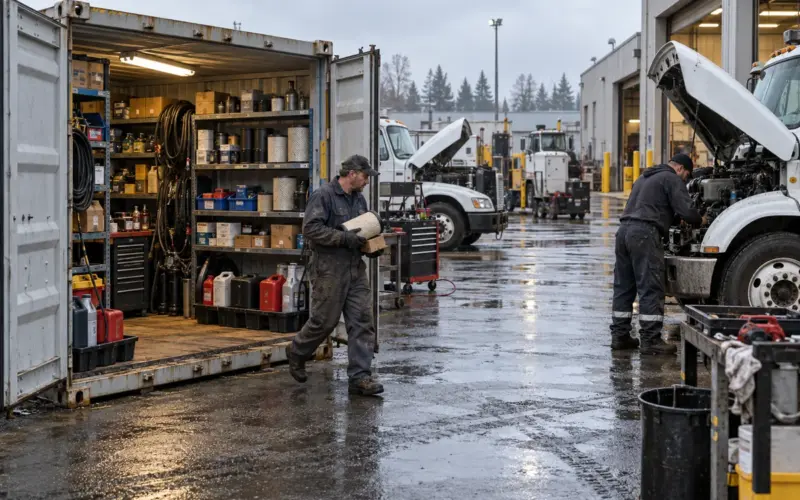

A skid steer attachment can look small beside the machine and still be too awkward for a standard container door. Before pricing landscaping equipment storage containers, measure the equipment in its stored configuration, including handles, guards, racks and anything that does not fold out of the way.
Make a real list: mowers, blowers, trimmers, attachments, spreaders, spare tires, hand tools and parts. Note what rolls, what needs forks and what two people must carry. The container is useful only when crews can load and retrieve that equipment without damaging the doors or unloading every smaller item first.
Door clearance beats nominal floor space
Compare the widest and tallest item with the clear opening, not merely the outside dimensions printed in an ad. The container dimensions chart provides a planning start, but the supplier should confirm the actual unit. Leave turning room outside the doors and enough interior aisle for safe handling. If ramps are required, discuss the load, slope and placement rather than stacking scrap lumber at the threshold.
Fuel, chemicals, batteries and powered equipment deserve separate attention. Follow the supplier’s restrictions and the safety rules that apply to the operation. Ventilation may be appropriate for ordinary damp tools, but it does not make every substance suitable for enclosed storage. For a larger drive-in building or repair bay, the steel building option may fit better than forcing machinery into a narrow box.
Wet grass and soil come in on wheels, decks and boots, so plan for ordinary cleanup instead of pretending the interior will stay spotless. Keep a sweep-out area near the entrance, protect boxed parts from muddy equipment and leave air space around anything put away damp. A few minutes of cleanup at the end of a route beats starting the next morning with blocked aisles and slippery floors.

Set the box where morning crews will actually use it
Place fast-moving handheld tools near the entrance and assign shelves or wall systems by crew. Keep the unit on stable, drained support and away from irrigation spray, snow piles and trailer turns. If the need follows a seasonal contract, review container rental terms; an established yard with repeated use may benefit from the control described in the purchase guide.
Give suppliers the equipment list, container size, address, term and delivery notes, then compare storage container prices. The best landscaping equipment storage containers are not simply the boxes that hold the most on paper. They are the ones the crew can open at six in the morning and find what they need before the trucks pull out.