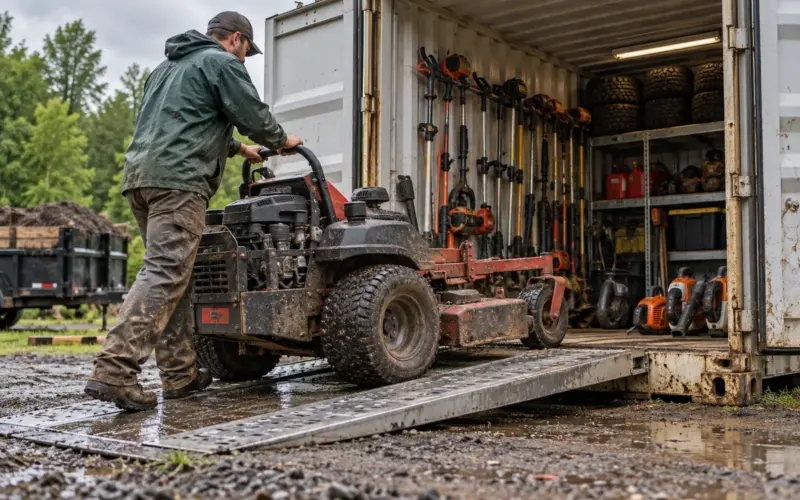

A maintenance shop can own plenty of parts and still lose a vehicle for half a day because nobody can find the right belt, filter or fitting. Fleet maintenance parts storage works when the container is treated like a compact stockroom, with locations crews can understand in work clothes at the end of a long shift.
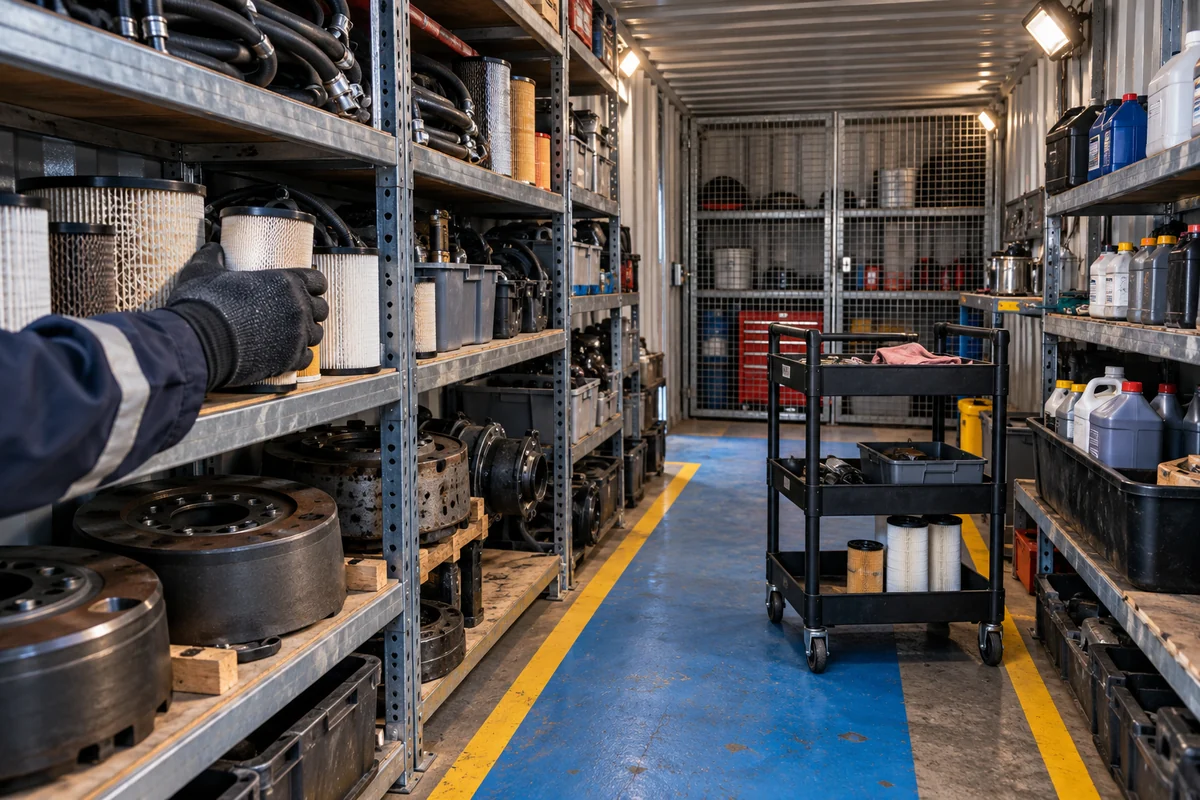
Start with the parts that are crowding the shop, then sort them by use rather than vendor. Fast-moving filters and brake items belong near the doors. Bulky tires, body panels and seasonal stock can sit deeper. Heavy components need low, rated storage, and long parts need a path that lets them come out without emptying two shelves first.
Give every shelf and floor zone a job
Choose the unit after sketching the racks, aisle and largest item. The container dimensions guide shows nominal choices, but shelf depth and clear door opening determine how the space actually works. Leave room to count stock and handle cartons. Packing a 40-foot unit solid creates more capacity on paper and a miserable picking route in practice.
A simple location code is enough if people use it. Mark bays, shelves and floor zones, then connect those locations to the shop’s parts record. Create a separate spot for cores, warranty returns and unknown pieces awaiting identification. Mixing returns into clean inventory gives the next mechanic a box that looks available but cannot go on a truck.
Match the term to the reason you need space
A seasonal fleet expansion or building renovation may support a storage container rental. A shop that has outgrown its parts room for years may prefer the control of a container purchase, especially if it plans permanent racks or approved modifications. Either way, place the unit on stable support near the shop without blocking tow trucks, fuel deliveries, wash lanes or snow removal.
Lighting, electrical work, ventilation and access changes should be planned with the supplier and installed correctly. Keep fluids, batteries and other regulated material under the rules that apply to the facility rather than assuming enclosed storage makes them appropriate. For a staffed workspace, use the separate mobile office route.
Describe the parts mix, preferred size, address, access and expected term, then compare fleet storage prices. Useful fleet maintenance parts storage is not a dark overflow box. It is a stockroom the second shift can pick from without calling the first shift at home.