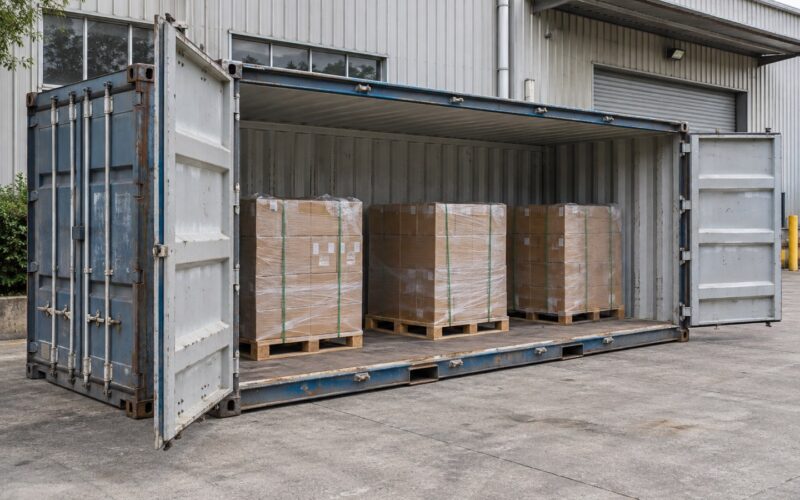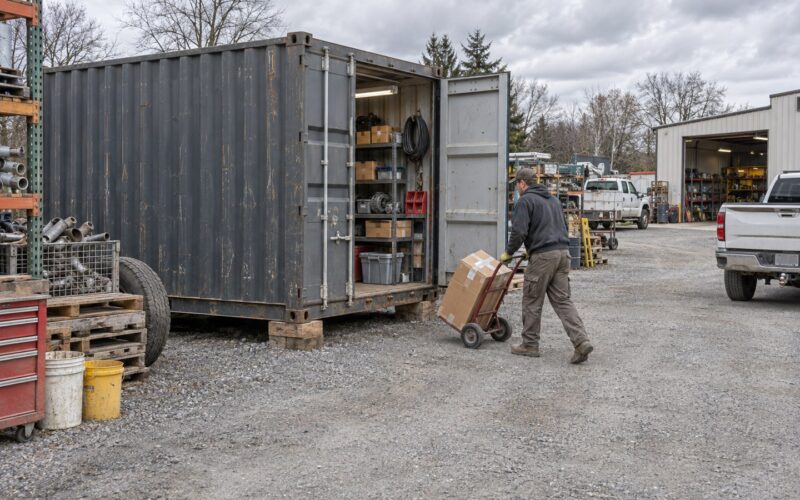
A business move rarely means every shelf can stop working at once. You may need temporary space for fixtures and archived materials while orders still leave the old premises. Compare storage container rental around what must remain accessible, rather than treating the container as the last empty space on the moving plan. See current container rental prices.
Separate Moving Stock From Working Stock
Make two lists: items that can stay packed until the new premises are ready, and items staff will need during the transition. Keep the second group identifiable and reachable. Packing a frequently used part behind dismantled shelving can turn a useful storage rental into repeated unloading work. See current container rental prices.
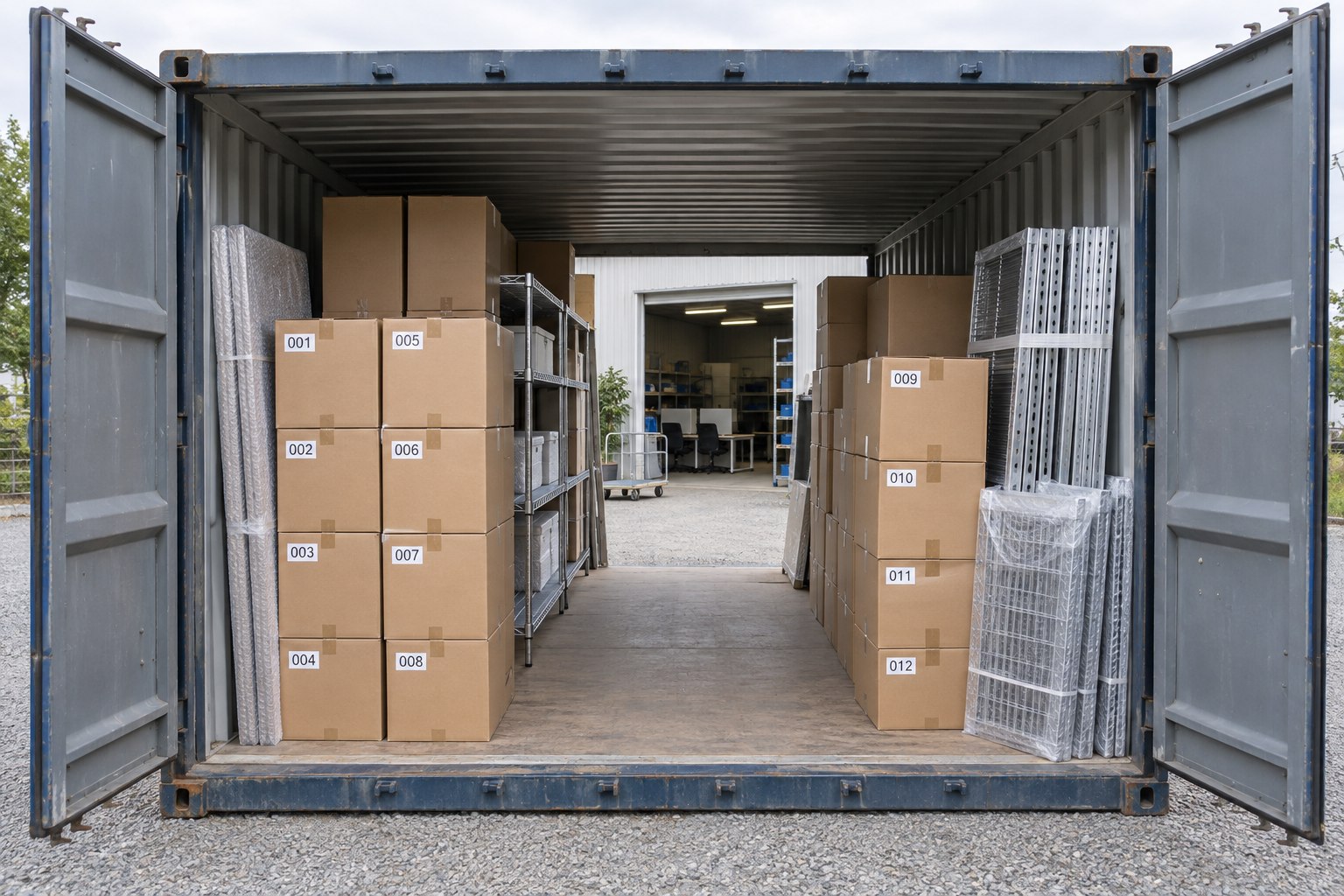
Choose an internal arrangement before the moving crew arrives. Number shelves or storage zones on your own inventory list and keep a clear route to the items used most often. Do not assume everything suitable for an indoor storeroom is suitable for an unconditioned steel container; review the storage requirements for the actual goods first.
Choose Placement for Both Delivery and Daily Access
A space beside a loading door may be convenient for staff but obstruct the vehicles carrying out the move. Show the supplier and removal contractor the same site plan. Use the delivery access checklist to identify where the vehicle operates and which routes must remain available.
Use the container size guide to compare the footprint with the stock arrangement. External dimensions alone do not show how your shelving, cartons and handling equipment will fit through the doors. Provide the largest item’s measurements and describe whether access is by hand, trolley or another method agreed for the site.
Also decide which premises will hold the container. Keeping it at the old location may suit early packing; placing it at the new one may suit staged unpacking. If your plan involves moving the container while loaded, obtain the supplier’s express agreement and a separate scope. Do not assume an ordinary rental collection includes transporting your contents.
Allow for the Gap Between Moving and Being Ready
The removal date and the date your stock can return to normal storage may differ. Ask how rental extensions are billed, how much notice collection needs, and whether any minimum term applies. Include delivery and collection in the comparison, then identify charges that depend on access or a changed schedule.
Keep the container’s collection route available as work finishes. New parking arrangements, fencing or stored pallets can block an otherwise straightforward pickup. Use the container pickup checklist to confirm the unit is emptied and accessible before booking its return; an unpacking job is easy to overlook once the new premises open.
Read the container rental agreement checklist alongside the moving programme. Then compare container rental prices for the location, stock and realistic transition period. That gives you a quote for the move you are organizing, rather than a monthly rate detached from it.