Plan for both freight and field work
Separate parts, tools and agricultural supplies by use and handling requirements. Check bulky items and aisle needs against the container size guide.
Review bridges, gates and wet ground
Confirm culverts, low clearances, overhead lines, turn radius and surface strength. Industrial sites add security check-in, docks and semitrailer circulation; keep emergency and storm-drain routes open.
Choose around mission length
Shipping container leasing fits a defense contract, construction phase or seasonal operation. Buying fits continuing distribution, farm-service or contractor storage with approved placement.
A city-to-rural delivery needs the whole route
Port and defense contractors may work on secured industrial campuses, while farm and landscape projects add rural gates, bridges, culverts and soft shoulders. Record the final approach, overhead lines and trailer pull-away area rather than supplying only a street address. Match the route with the container footprint. Keep docks, livestock, equipment and emergency movement open. Rain and storm drainage should be considered before choosing what appears to be an unused corner of the property.
Select a commercial term around recurring work
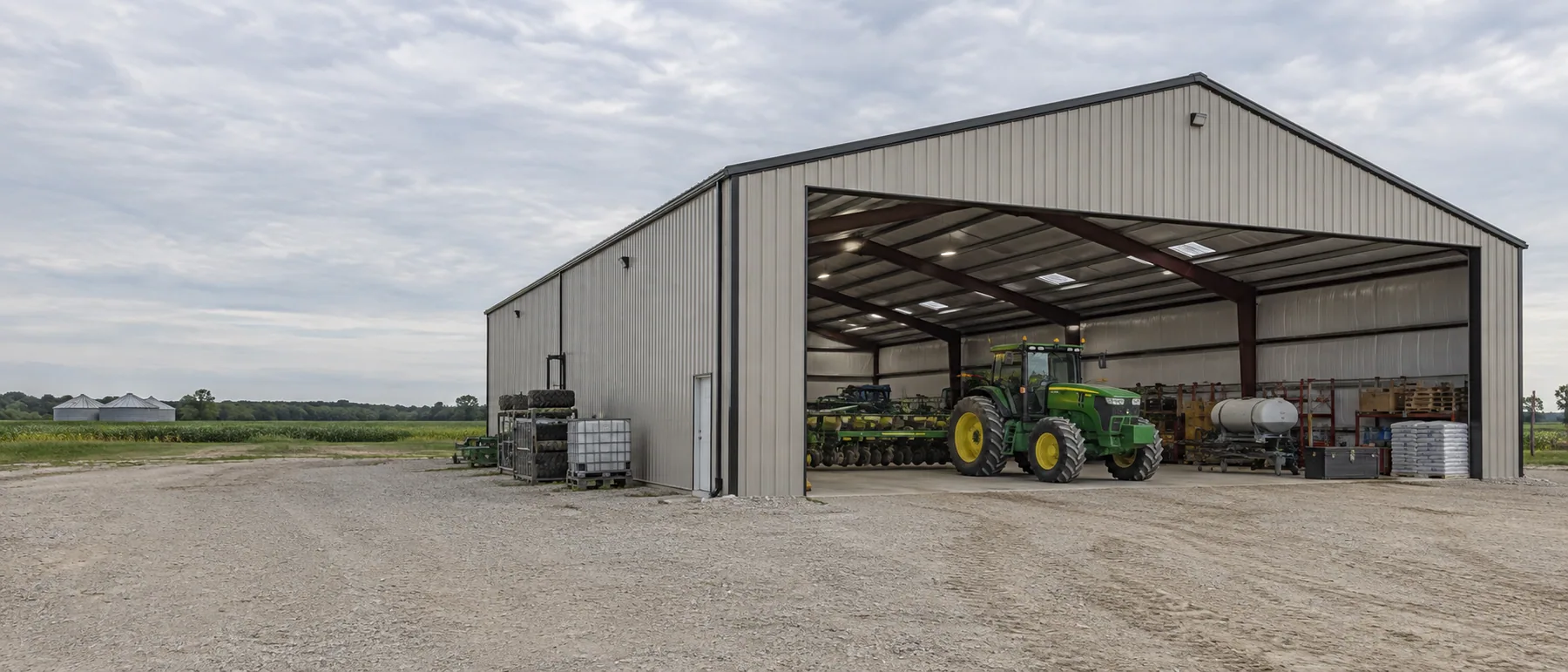
Organize parts by contract or service interval and separate agricultural products with special handling needs. Rent for a defined build or contract with pickup feasible at term end. Buy recurring distributor, contractor or farm-service capacity with maintenance assigned. Review farm-storage guidance, and compare broad machinery coverage with a steel building when regular equipment access or covered repair work requires more than compact lockable space.