
Plan for pallets, parts or farm equipment
Separate the load by use and verify doors, aisle and height on the shipping container size guide.
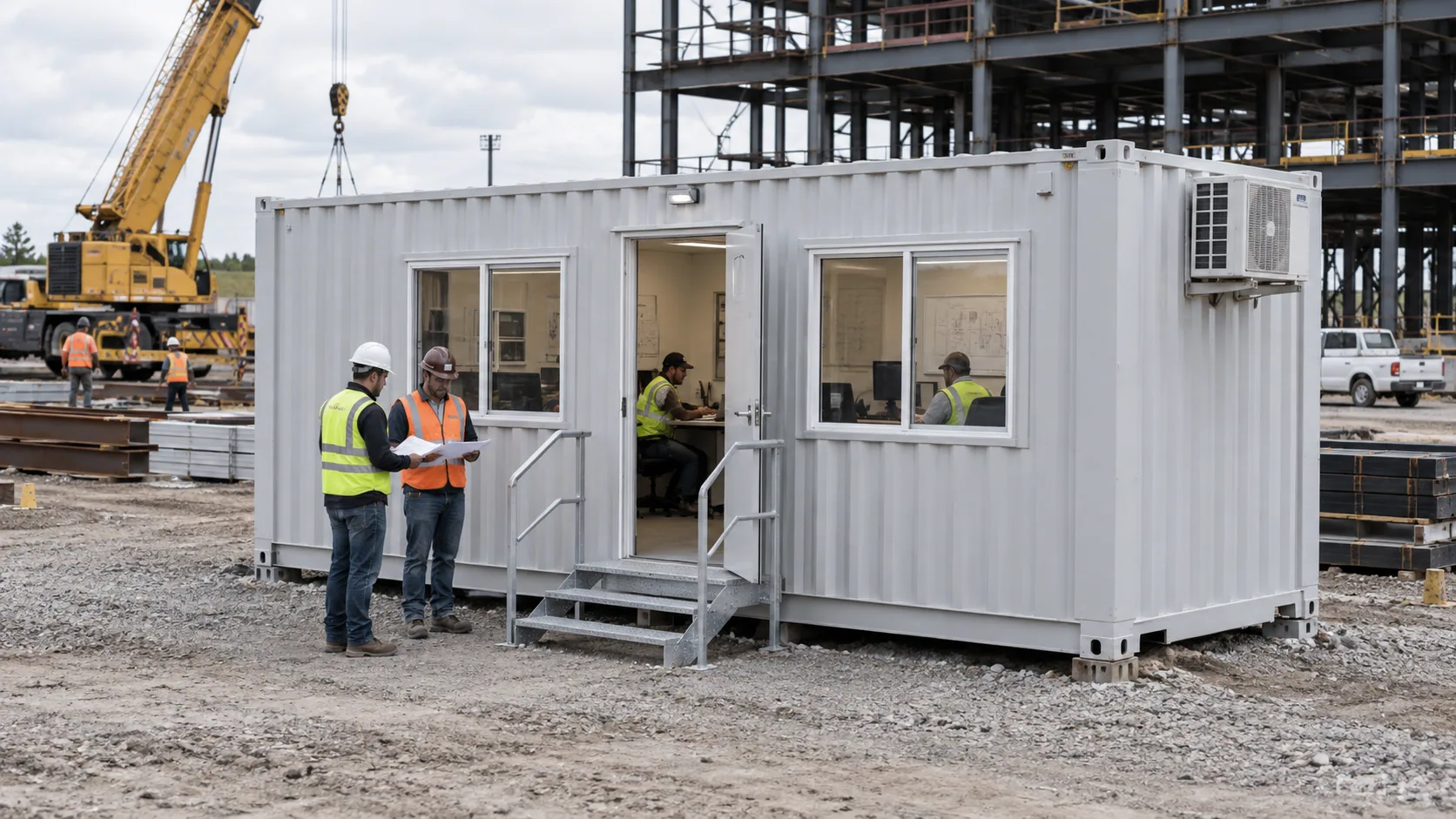
Check both dock and rural access
Coordinate warehouse shifts and trailer turns; on farms, check grades, gates, soft shoulders and animal traffic.
Let recurring use decide
Lease peaks and projects. Buy for long-term plant, farm or service use; machinery work may need a steel building.
Integrate air freight, manufacturing and river access
Warehouse and plant sites should coordinate docks, rail, shifts and trailer circulation. Hills and storms make a stable drained pad and protected pickup route equally important.
Keep logistics and manufacturing stock reachable
Label overflow by customer or movement rate and plant parts by machine or work order. Dense goods belong low, while frequently issued stock belongs near the doors. Compare shelves and handling paths with the usable dimensions. Temperature-sensitive medical, food or technical goods need a separate suitability review. The goal is controlled additional space that supports the indoor system, not a full box that requires repeated unloading to retrieve one item.
Plan around air freight, river industry and weather
Coordinate gates, docks, rail, shifts and trailer turns before placement. Other sites may add hills, wet ground and narrow approaches. Keep drainage and emergency movement open. Lease for inventory peaks, plant work or construction; buy recurring contractor or warehouse capacity with long-term approval. Review support choices before preparing the pad, and protect the pickup line as fencing or yard layouts change during the operating period. Maintain stock labels when seasonal inventory shifts between storage areas.