Fit the container to the approved footprint
Measure gates, setbacks, parking and truck access before selecting a container length. Load project material by installation phase so the box stays useful through the job.
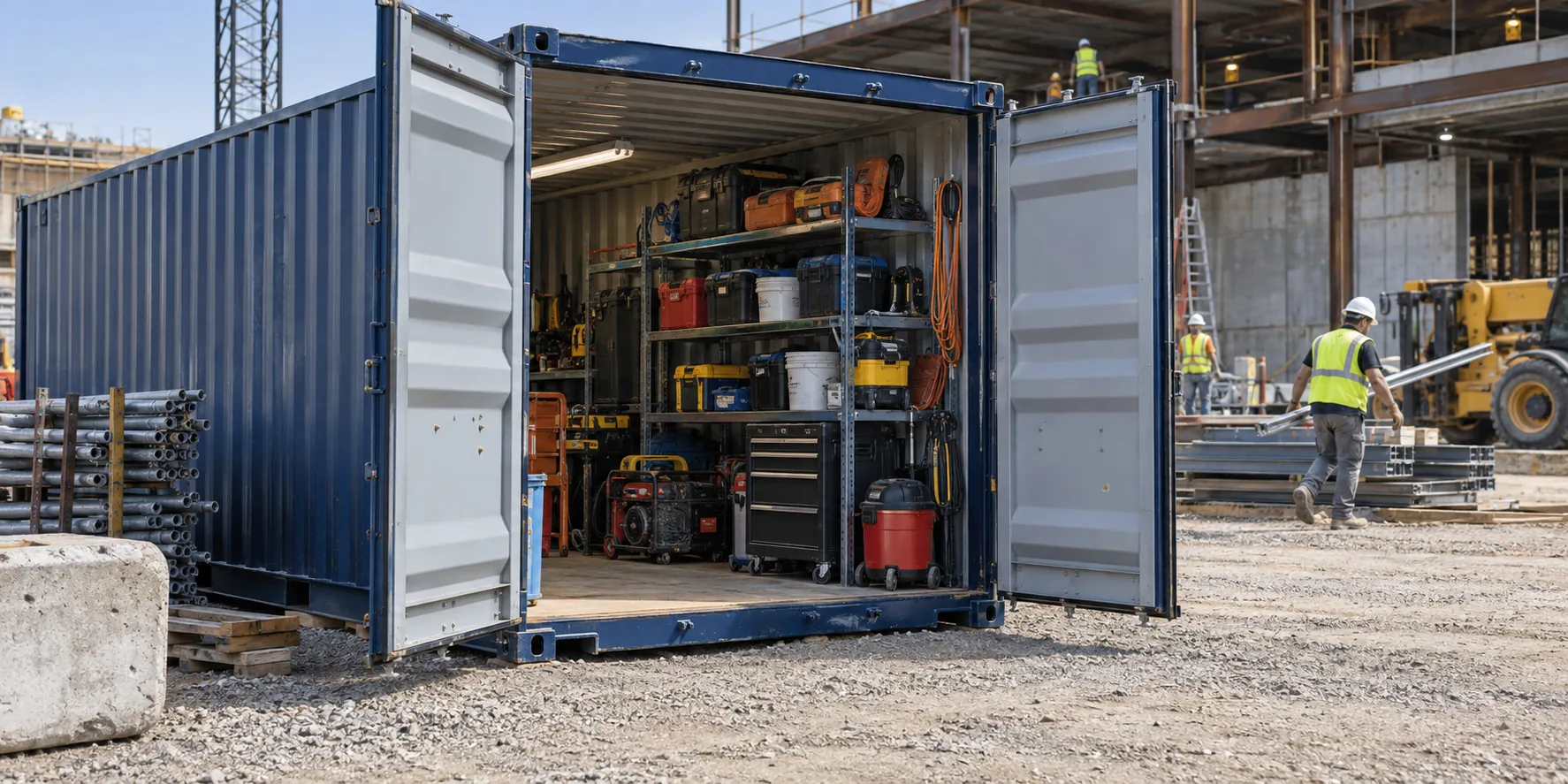
Prepare for rain without blocking drainage
Use stable level supports and keep the unit away from swales, soft shoulders and emergency routes. Confirm association, property and local placement requirements before scheduling delivery.
Plan storm and project exits
A lease suits construction or restoration when pickup timing remains practical. Buying fits an established service or landscape yard with a maintained long-term location and storm plan.
Put the approved suburban footprint first
Construction, landscape and restoration projects should confirm property or association approval before requesting a unit. Record gates, parking, overhead trees and the trailer pull-away area. Check drainage edges and soft shoulders rather than assuming an open lot is a firm delivery surface. Compare the available footprints with space that can remain outside sidewalks, emergency access and customer routes. A shorter organized box can preserve more useful working room than extra length on a constrained property.
Make storage and storm responsibilities clear
Group tools by crew and materials by installation phase, keeping clean supplies separate from wet returned equipment. Sensitive goods may require humidity or temperature controls. Rent for construction or recovery with realistic extensions and pickup; buy recurring service-yard capacity with maintenance assigned. Review weather-resistance limits and include the property storm procedure. Later landscaping, gates and parked equipment must not close the removal route or place the container across a swale needed during heavy rain.