Different operations need different interiors
Manufacturing parts favor labeled racks and weight control; food-adjacent packaging needs cleanliness and moisture planning; farm-service inventory needs room for bulky items. Choose from the common container sizes only after laying out those workflows.
Check the route on both sides of town
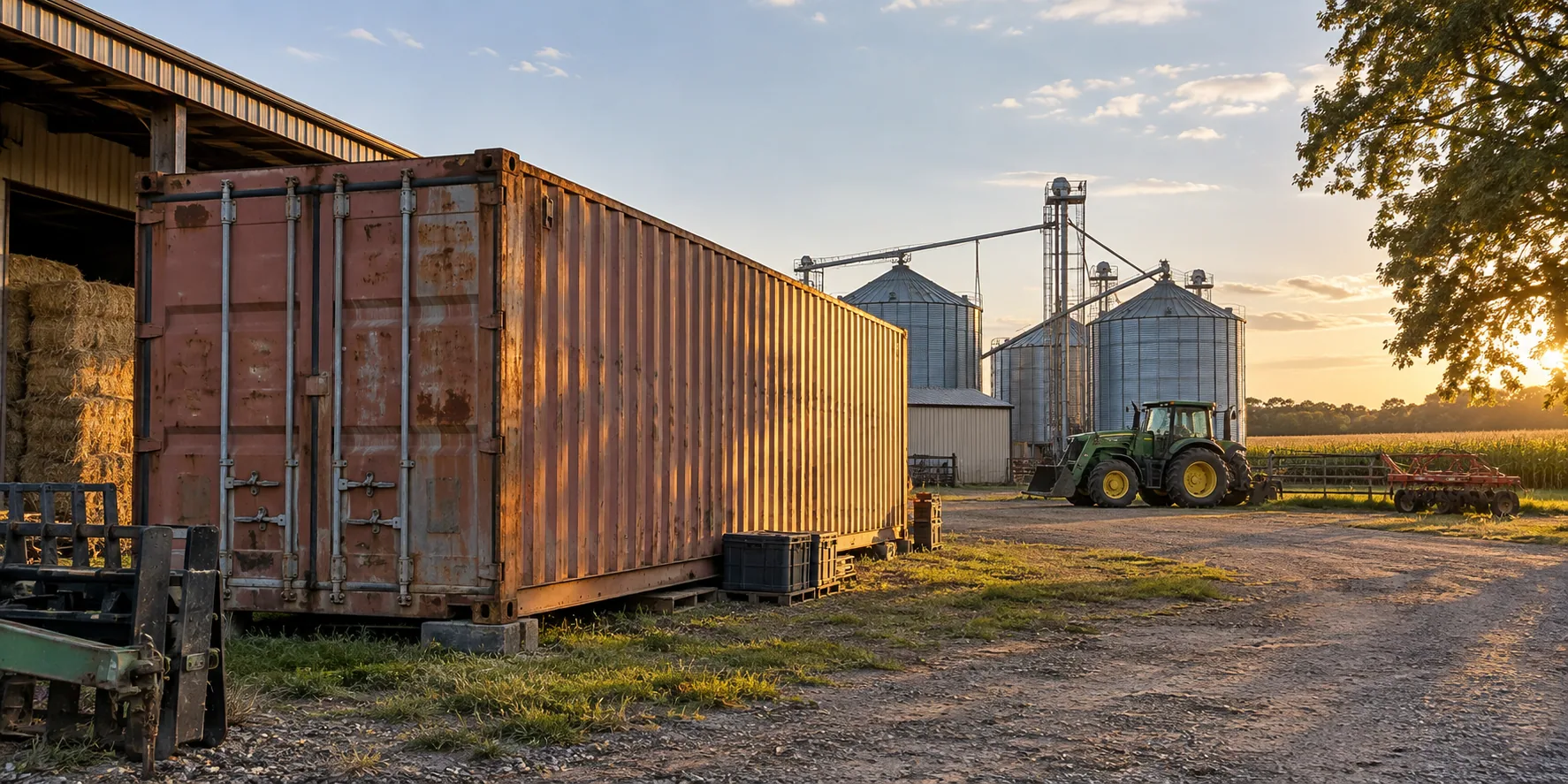
Snow, development traffic, campus or business-park delivery rules and rural roads east of the city can all affect placement. Confirm gate width, turns, surface and overhead clearance, plus the direction the doors should face.
Respect every movement around the box
Keep docks, cyclists, pedestrians, farm equipment and emergency routes clear. Reserve winter access and drainage around the supports. If the operation needs broad indoor production or machinery space, compare a container with a steel building.
Let planned use determine ownership
Shipping container leasing fits build-outs, equipment transitions and seasonal peaks. Buying gives a manufacturer, food business, farm-service operator or contractor control over long-term improvements.
Food-adjacent and technical users should compare the guidance on shipping-container ventilation with their actual product requirements.
Separate technical supplies from rugged field gear
Longmont technical contractors and agricultural-service businesses may need very different storage conditions. Establish which materials suit ordinary dry capacity and keep sensitive components in their appropriate environment. For durable tools and project stock, label shelves by assignment and keep returned equipment separate from checked supplies. Use the sizes chart to verify racks and complete equipment cases. An issue aisle and receiving register make outside stock useful to another crew instead of relying on the person who originally packed the container.
Keep access workable on commercial and rural sites
Shared lots need parking and loading coordination; rural approaches need gate, culvert and shoulder review. Send photographs of the complete final route and confirm door orientation. Leasing can follow an expansion, construction package or seasonal requirement. Buying shipping containers suits repeated storage at an approved location with upkeep assigned. Keep snow storage and runoff away from the entrance, inspect support after changing conditions and preserve removal access as fences, trailers or landscaping alters the yard.