Size for the inventory and the pad
Draw shelves, aisle and the largest item against the container dimensions. A longer box also needs a longer truck approach.
Reserve winter and removal access
Keep plowing, fire and fleet routes open, and resolve local anchoring questions on exposed sites.
Separate storage from occupied space
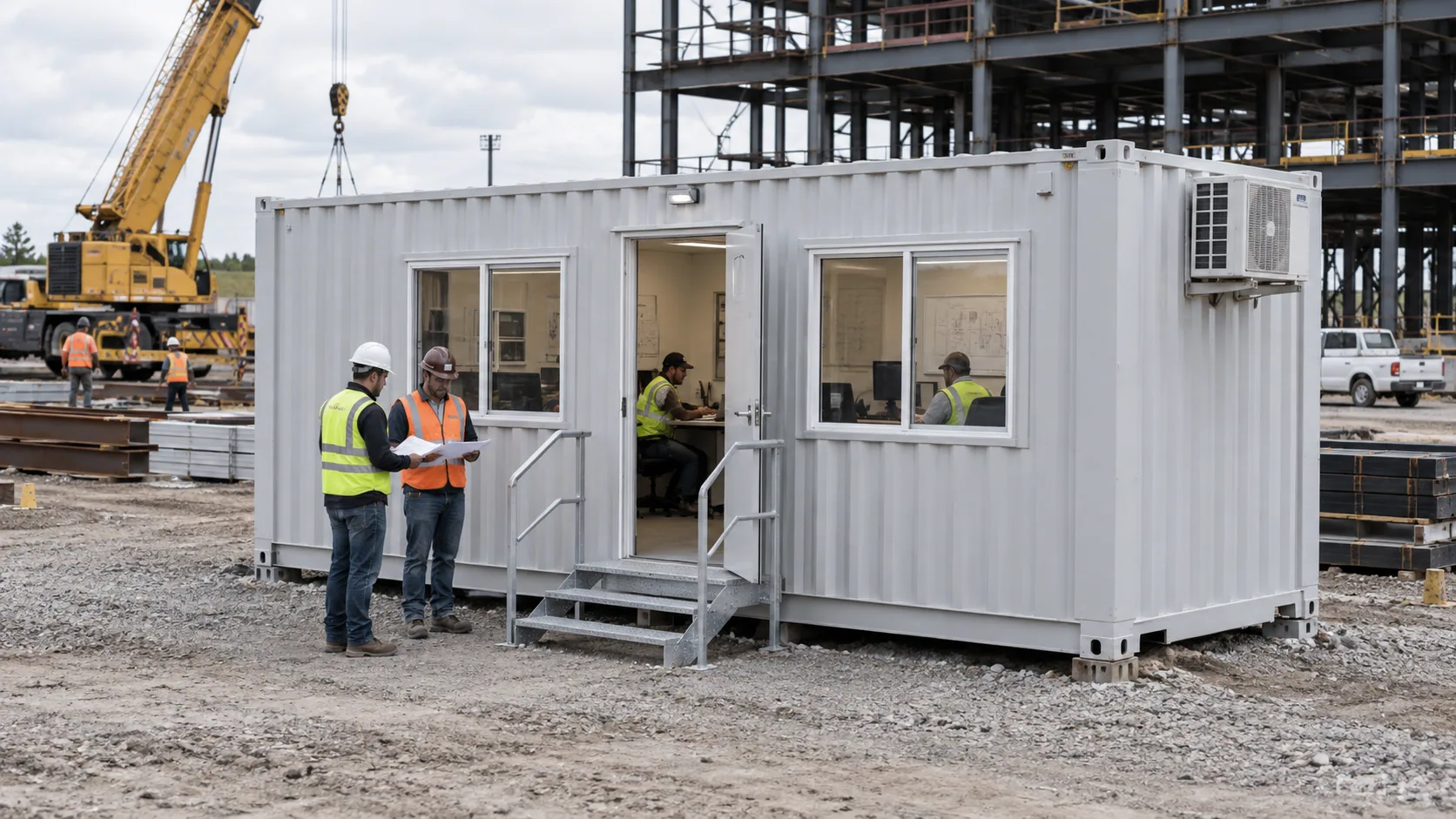
Use mobile offices for crews. Lease projects and events; own recurring contractor or distribution capacity.
Resolve altitude, wind and infill constraints
Urban job sites may have little staging room, while exposed yards add anchoring questions. Confirm snow storage, door direction and the eventual removal path before fences or buildings close in.
Design a winter-ready project storage layout
Leave room to clear doors and retrieve daily tools without unloading the entire box. Organize event or building materials by deployment phase, keep heavy goods low and verify racks against the inside dimensions. Temperature-sensitive contents need an appropriate environmental plan. On exposed properties, discuss local anchoring requirements rather than assuming weight alone resolves wind concerns. The container position should also avoid roof-shed zones, runoff paths and the area used to store plowed snow.
Keep infill logistics and removal coordinated
Confirm gates, street staging, overhead utilities, delivery windows and the final trailer pull. Reserve the removal route through later paving and fencing. Rent for construction, events or equipment transitions; purchase for recurring contractor or distribution capacity with approved long-term space. If people need heat, desks and daily occupancy, compare a mobile office. Storage and occupied workspace require different layouts and provisions even when both are needed on the same project.