
Start with a written use plan
List people, equipment, loads, environmental needs, doors, windows, power, lighting and finishes before cutting the shell. The interior layout should resolve movement and service access as well as appearance.
Coordinate structural and trade work
Large openings and removed corrugations can require reinforcement. Use qualified professionals for structural, electrical, mechanical and life-safety work, and confirm how every penetration will be flashed and sealed.
Own the modification path
Permanent changes normally fit a purchased container; leased units often restrict alterations. For occupied temporary space, compare a purpose-built mobile office before committing to a custom conversion.
Buy modified shipping containers for a planned use
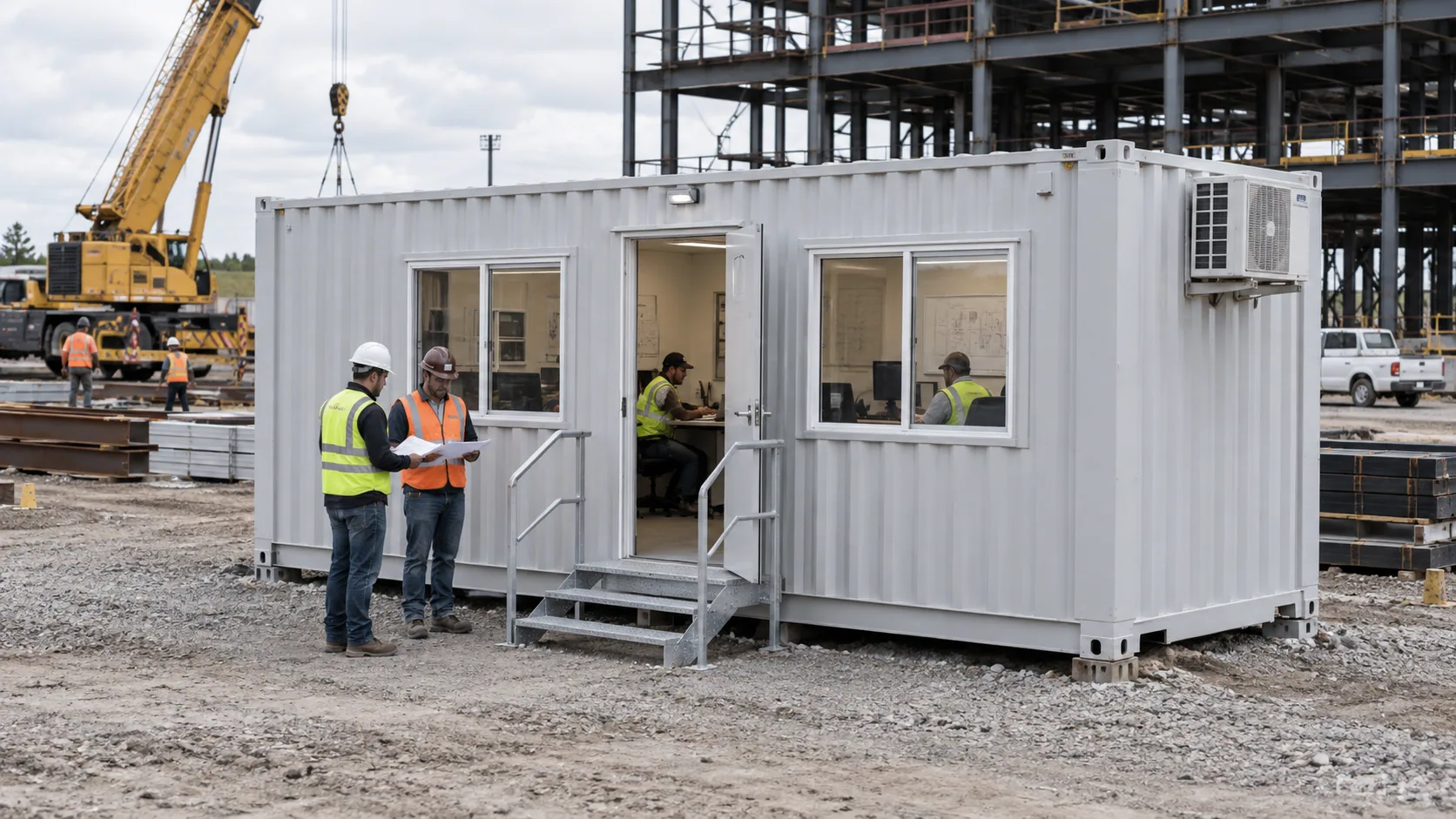
Custom shipping container modifications should begin with a written layout and a suitable base unit. If you plan to buy a shipping container for doors, windows, lighting or insulation, define the finished scope before accepting a bare-container quote. Review shipping container modification options and container insulation considerations. Temporary workspace may be better served by a mobile office rental; do not alter a rented storage container without agreement.
Compare modified shipping containers: quote checklist
- Written use and floor plan
- Structural reinforcement around openings
- Weatherproofing and corrosion protection
- Power, HVAC, ventilation and lighting
- Permits, occupancy and delivery setup
Use the shipping container sizes and dimensions guide and common questions to resolve the details before comparing suppliers.